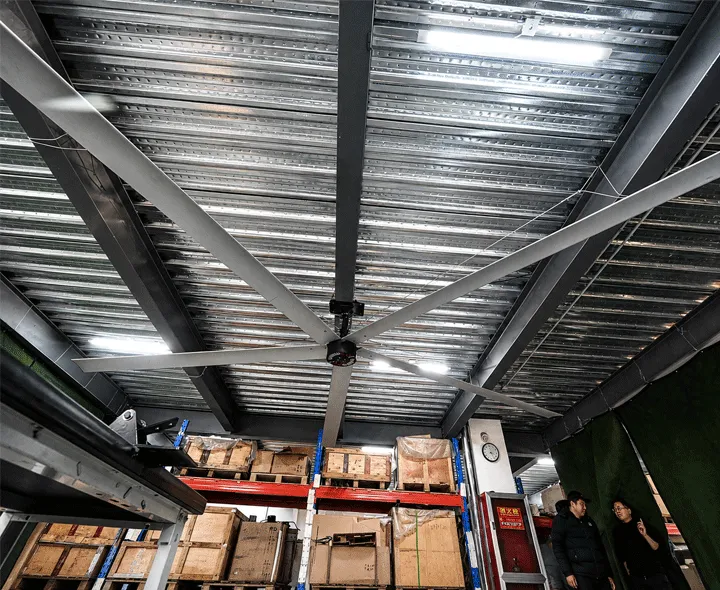
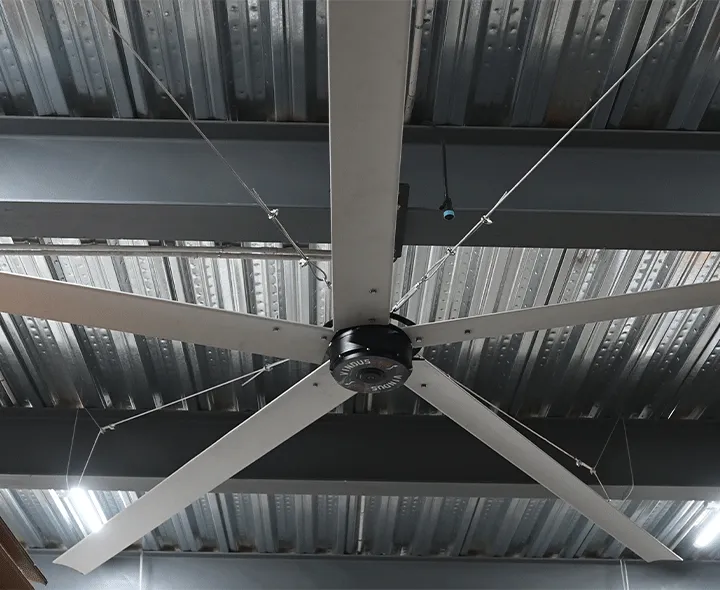
Big rooms get hot. Workers feel tired. Air does not move well. Energy bills keep going up. Does this sound like your building?
You are not alone. Every day, thousands of?warehouse managers,?factory owners, E?facility directors?face the same problem. Poor air flow makes people uncomfortable. It wastes money. And it hurts how much work gets done.
But here is the good news. There is a simple fix. It is called a?High-Volume Low-Speed (HVLS) fan. Questi?ventilatori da soffitto industriali?are changing how we cool and heat big spaces. They work quietly. They save money. And they make people feel better at work.
Let me show you how.
Why Most Big Spaces Feel Uncomfortable
Walk into any?magazzino,?manufacturing facility, O?palestra?on a hot day. What do you feel?
Hot air rises to the ceiling. Cold air stays near the floor. The middle feels stuffy. Your?Sistema HVAC?runs all day. But people still complain.
In winter, the problem gets worse. Your heater pumps warm air into the room. But all that heat floats up to the ceiling. The floor stays cold. Workers wear jackets indoors. Your heating bills skyrocket.
This is called?thermal stratification. It happens in every building with high ceilings. And it costs you money every single month.
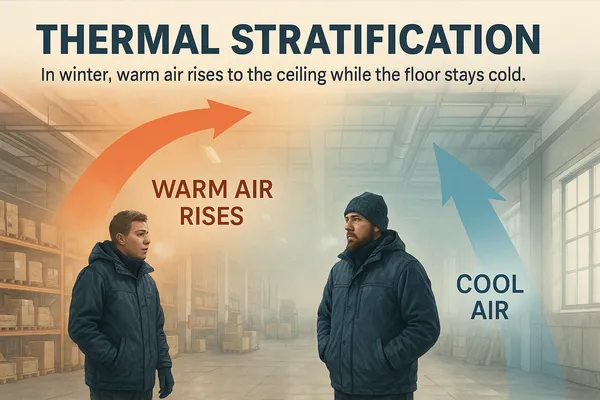
thermal stratification
How Bad Is This Problem?
Let me share some numbers. Studies show that poor?circolazione dell'aria?can:
- Make your?costi di raffreddamentogo up by?30%?o più
- Waste?20%of your heating energy every winter
- Drop worker?produttivitàwhen people feel too hot or too cold
- Create moisture problems that damage your inventory
Uno?logistics company?tracked their energy bills for a year. They spent over $50,000 on cooling alone. Their warehouse had no?air movement systems. The air just sat there, hot and heavy.
Does this sound familiar? If so, keep reading.
What Happens When You Ignore Poor Air Flow
Bad air flow is not just uncomfortable. It creates real business problems.
Problem #1: Wasted Energy
Tuo?HVAC supplement systems?work overtime. They pump cold air in summer. They blast heat in winter. But most of that conditioned air never reaches your workers.
The result? You pay for air conditioning that does not cool. You pay for heating that does not warm.
Problem #2: Unhappy Workers
When people feel too hot, they slow down. Their focus drops. Mistakes go up. Studies prove that?comfort termico?directly affects how much work gets done.
In one?centro di distribuzione, workers reported feeling exhausted by midday. The building had no?facility cooling equipment. Productivity dropped by 15% on hot days.
Problem #3: Damaged Inventory
Poor?qualità dell'aria?creates moisture. Moisture creates condensation. Condensation damages products. In?cold storage?facilities, this can ruin entire shipments.
Problem #4: High Turnover
Nobody wants to work in an uncomfortable building. When your facility feels like an oven in summer or an icebox in winter, good workers leave. You spend more time and money hiring and training replacements.
The question is: How long will you let this continue?
How Industrial Ceiling Fans Fix Everything
Here is where?ventilatori da soffitto industriali?change the game. Specifically,?Ventilatori HVLS?(High-Volume Low-Speed fans).
These are not your regular ceiling fans. They are?large-diameter industrial fans?engineered to move massive amounts of air across huge spaces—quietly, efficiently, and affordably.

What Makes HVLS Fans Different?
Traditional fans spin fast. They move air in a small area. They are loud.
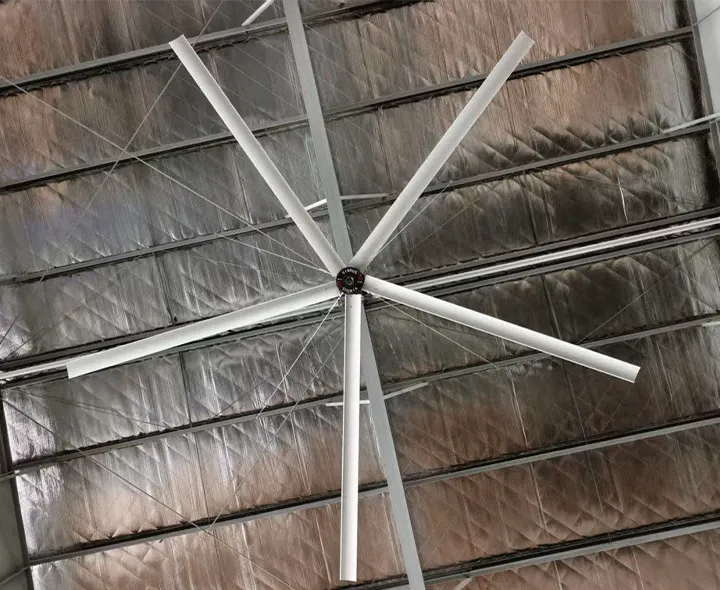
Ventilatori da soffitto HVLS?work the opposite way. They spin slowly. But their?large commercial fans?blades (typically 7 to 24 feet across) push a huge column of air downward. That air spreads out across the floor, creating a gentle breeze that covers thousands of square feet.
This is called?air flow optimization. And it solves all the problems we just talked about.
The Science: How Air Movement Saves You Money
Let me explain the science in simple terms.
Summer Cooling: The Wind Chill Effect
When air moves over your skin, it helps sweat evaporate. This makes you feel cooler—even when the actual temperature stays the same.
Ventilatori HVLS?create a constant, gentle breeze. This?raffreddamento evaporativo?effect makes people feel?7 to 11 degrees Fahrenheit cooler?without changing the thermostat.
What does this mean for you? You can set your air conditioner to a higher temperature. Your?cooling cost reduction technology?kicks in. Energy bills drop by?up to 30%.
| Metrico |
Risultato |
| Perceived Temperature Drop |
7-11°F cooler |
| Cooling Cost Savings |
Fino a 30% |
| Uso dell'energia |
Pennies per hour |
Winter Heating: Destratification
In winter,?ventilatori a soffitto industriali per la produzione?reverse direction. Instead of pushing air down, they pull air up gently. This mixes the warm ceiling air with the cooler floor air.
This process is called?de-stratification. It eliminates hot and cold spots. Your entire space reaches an even temperature.
The result? Your heater runs less often. You save?up to 20%?on heating costs.
Five Big Benefits of Industrial Ceiling Fans
Let me break down exactly what?HVLS industrial solutions?do for your business.
Benefit 1: Drastically Lower Energy Bills
We already covered the numbers. But let me say it again:
- Summer savings: Up to 30% off cooling costs
- Winter savings: Up to 20% off heating costs
- Year-round operation: These fans pay for themselves fast
Most companies see a?return on investment (ROI)?within?6 months to 2 years.
Benefit 2: Better Air Quality and Safety
Industrial air circulators?do more than cool. They:
- Reduce humidity and condensation
- Push out stale air and odors
- Help dissipate fumes in?production facility fansenvironments
- Minimize dust buildup on surfaces
This creates a safer, healthier workplace. It is especially important in?automotive shops,?agricultural barns, E?food processing plants.
Benefit 3: Happier, More Productive Workers
Comfortable workers are productive workers. When people feel good, they:
- Focus better
- Make fewer mistakes
- Stay in their jobs longer
Uno?manufacturing facility?installed?Ventilatori HVLS per magazzino?operations. Within three months, they measured a noticeable improvement in employee satisfaction scores.
Benefit 4: Quiet Operation
You might think a?24-foot fan?would sound like an airplane. But you would be wrong.
Low-speed air movement?means these fans are incredibly quiet. Most?quiet fans for sport centers?operate at less than 50 decibels—about as loud as a normal conversation.
Benefit 5: Built to Last with Minimal Maintenance
Heavy-duty fans?are made from?aircraft-grade blades,?stainless steel housing, E?corrosion-resistant?materials. They have few moving parts. This means:
- Less maintenance
- Fewer breakdowns
- Longer lifespan (often 15+ years)
Many models now use?gearless HVLS technology?con?direct drive motors. This eliminates the need for belt changes and gear oil.
How to Choose the Right Industrial Ceiling Fan: A Simple 4-Step Plan
Not all?ventilatori da soffitto industriali?are created equal. Here is how to pick the right one for your space.
Step 1: Measure Your Space
The size of your fan depends on:
- Altezza del soffitto(fans should hang at least 10-15 feet above the floor)
- Square footageof the area you want to cool
Here is a simple guide:
| Space Size (sq. ft.) |
Diametro consigliato del ventilatore |
| Up to 2,000 |
7-9 feet |
| 2,000-5,000 |
10-14 feet |
| 5,000-10,000 |
14-18 piedi |
| 10,000-20,000 |
18-24 feet |
| 20,000+ |
Multiple large fans |
For example, a typical 50,000 sq. ft. warehouse might need 4 to 6?best HVLS fans?strategically placed for full coverage.
Step 2: Choose the Right Motor
You have two main choices:
Direct Drive Motors:
- Quieter operation
- Higher energy efficiency
- Less maintenance
- Longer lifespan
Geared Motors:
- Traditional technology
- Lower upfront cost
- Requires periodic belt and gear oil changes
For most applications,?direct drive?is the smarter long-term choice.
Step 3: Consider Blade Design
Moderno?blade aerodynamics?matter. Look for:
- Airfoil-style blades(shaped like airplane wings)
- Lightweight but strong materials
- Custom blade configurationoptions
These features maximize?air velocity?while minimizing power consumption.
Step 4: Pick Your Control System
Options range from basic to smart:
- Wall-mounted dials: Simple on/off and speed control
- Remote controls: Convenient for high ceilings
- Smart thermostats control fans: Integrate with your?building management system
- Variable speed fans: Adjust automatically based on temperature
Many facilities now use?motion-activated fans?in areas with intermittent use to save even more energy.
Where Industrial Ceiling Fans Make the Biggest Impact
Commercial-grade HVLS fans?work in almost any large space. But they shine in certain applications.
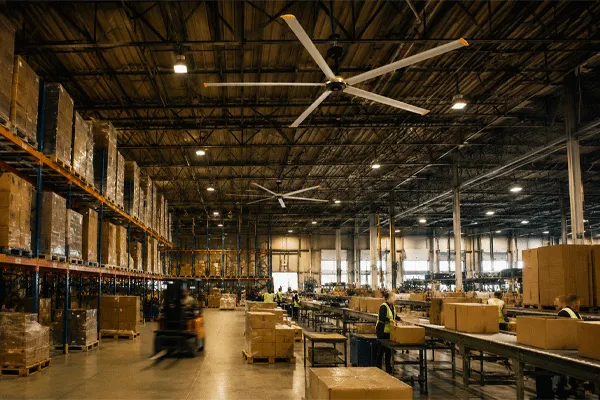
Magazzini e centri di distribuzione
Warehouse HVLS fans?eliminate hot spots. They keep inventory at stable temperatures. And they make?material handling?safer and more comfortable.
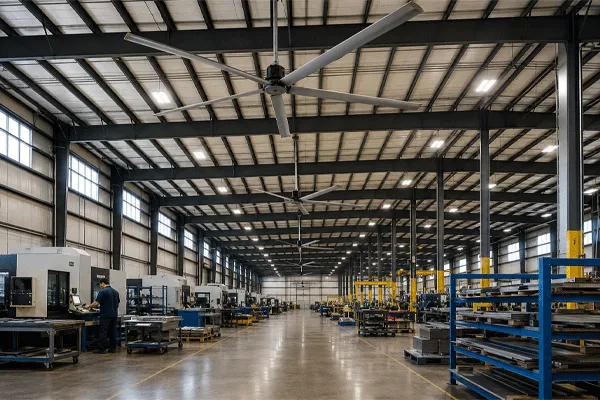
Impianti di produzione
Big industrial fans for manufacturing?aiutare con?controllo del clima, fume dissipation, and worker comfort. They reduce the load on expensive?industrial air conditioning?sistemi.
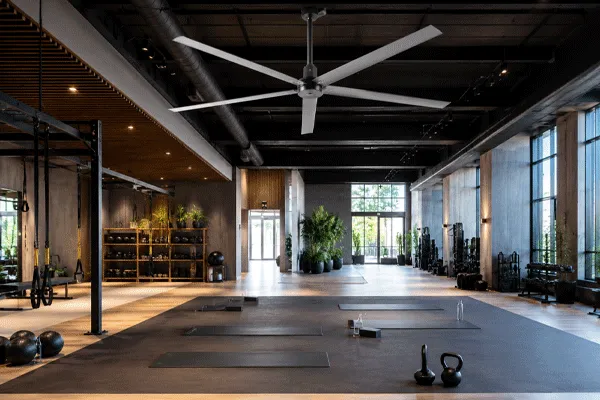
Palestre e centri sportivi
High bay fans?keep athletes and spectators comfortable. They reduce humidity. And they operate quietly enough not to disrupt games or practices.
Edifici agricoli
Barn ventilation?is critical for animal health.?Ventilatori a soffitto ad alto volume per l'agricoltura?reduce heat stress in livestock, improve air quality, and minimize odors.
Automotive Shops and Garages
Industrial exhaust systems?combined with?HVLS fans for automotive?applications help clear fumes and regulate temperature in repair bays.
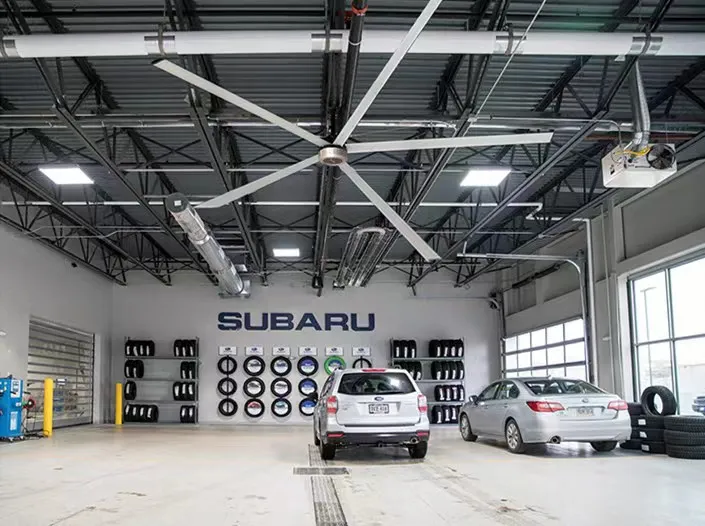
applicazione ventilatori hvls
Large Atriums and Event Venues
Plant ventilation solutions?in hotels, airports, and convention centers benefit from?big commercial ceiling fans for commercial buildings. These fans provide comfort without the high costs of traditional HVAC.
Real Results: Case Study from a Logistics Warehouse
Let me share a real example. A large?logistics and warehousing?operation struggled with high energy costs and poor air circulation.
The Challenge
Their 80,000 sq. ft. facility had:
- Inconsistent temperatures (hot zones near the roof, cold spots on the floor)
- High energy bills (over $60,000/year for cooling alone)
- Worker complaints about stuffiness and discomfort
La soluzione
They installed six?ventilatori da soffitto commerciali—specifically,?Ventilatori da soffitto HVLS?with direct drive motors.
The Results
Within the first year:
- Energy costs dropped by 28%(saving over $16,000)
- Temperature became consistentthroughout the building
- Air quality improvedsignificantly
- Employee comfort scores rose by 35%
IL?payback period?was just 14 months. Every year after that is pure savings.
Why Modern Engineering Matters
Not all?industrial fan systems?are equal. The technology behind the fan makes a huge difference.
Advanced Motor Technology
Moderno?high-torque motor fans?deliver more power with less electricity.?Direct drive?systems eliminate friction losses. And?motor efficiency ratings?have improved dramatically in recent years.
Smart Blade Design
Engineers use?wind tunnel testing?E?air velocity maps?to design blades that move the most air with the least power.?Aircraft-grade blades?are strong, light, and perfectly balanced.
Vibration Control
Vibration-dampening technology?ensures smooth, quiet operation even at large diameters. This extends the life of both the fan and your building structure.
Integration with Building Systems
The best?integrated ventilation systems?connect your fans to your?Riscaldamento, ventilazione e condizionamento (HVAC)?E?smart thermostats. This creates a complete?climate control system?that adjusts automatically to conditions.
Common Questions About Industrial Ceiling Fans
How much do industrial ceiling fans cost?
Prices range from?$2,000 to $8,000+?depending on:
- Diametro del ventilatore
- Tipo di motore
- Features and controls
Remember: even an expensive fan pays for itself quickly through energy savings.
How much energy does an HVLS fan use?
Most large?Ventilatori HVLS?use about?1 to 2 kilowatts?of power—about the same as a?commercial-grade hairdryer. They cost just?pennies per hour?to run.
Can you run an industrial fan in reverse during winter?
Yes! This is one of their biggest advantages. Reversing creates gentle?destratificazione?that evens out temperatures without creating a cold breeze.
Who are the leading industrial fan brands?
The market includes established names like?Grandi fan del culo,?Cacciatore industriale,?MacroAria,?Verdediavolo, E?Airius Fans. Newer innovators like?Tifosi di KUUL?bring fresh engineering and sustainable design to the industry.
How long do industrial ceiling fans last?
With proper installation and minimal maintenance, a quality?Ventilatore HVLS?should last?15 to 20 years?o più.
Are there fans for outdoor use?
S?!?Ventilatori da soffitto per esterni HVLS?are built with weather-resistant materials. They work great for?covered loading docks,?outdoor dining areas, E?agricultural facilities.
The Future of Industrial Air Movement
Industrial fan technology?keeps getting better. Here is what is coming:
Smarter Controls
IoT-enabled fans?connect to the cloud. You can monitor performance, adjust settings remotely, and get maintenance alerts before problems occur.
Better Energy Efficiency
Energy Star-rated fans?E?green building certified fans?continue to push efficiency higher. Some models now achieve?motor efficiency ratings?above 90%.
Sustainable Materials
Manufacturers are using more?ecologico?materials and?recyclable components. Companies like?Tifosi di KUUL?prioritize?sustainable innovation?in every product.
Soluzioni personalizzate
Industry-specific fan solutions?are becoming more common. Engineers design fans specifically for?food processing,?pharmaceutical manufacturing, O?electronics assembly.
Take Action: Start Saving Today
Here is the bottom line.?Ventilatori da soffitto industriali—especially?Ventilatori HVLS—deliver measurable, immediate benefits:
??Cut energy costs?by up to 30% in summer and 20% in winter
??Migliorare il comfort e la produttività dei lavoratori
??Enhance air quality and workplace safety
??Operate quietly?with minimal maintenance
??Pay for themselves?in 6 months to 2 years
The technology is proven. The ROI is clear. And every month you wait costs you money.
What to Do Next
- Measure your space. Calculate square footage and ceiling height.
- Identify problem areas. Where does air circulation fail now?
- Research options. Look at different fan sizes, motors, and features.
- Request a consultation. Most?HVLS fans manufacturersoffer free site assessments.
- Calculate your ROI. Factor in energy savings, productivity gains, and maintenance costs.
Why KUUL Fans Stands Out
Founded in 2019 with a vision for?sustainable innovation, KUUL Fans combines?Swedish engineering?expertise with global manufacturing capabilities. Every product maximizes?efficienza energetica?while minimizing environmental impact.
Da?magazzini commerciali?A?impianti industriali,?hospitals,?palestre, E?grandi spazi aperti, KUUL Fans deliver smooth, consistent airflow across continents. With operations in Spain, China, and the United States, the company brings advanced?eco-friendly industrial fans?technology to facilities worldwide.
What sets them apart? An unwavering commitment to?sostenibilità, cutting-edge technology, and a passion for improving?qualità dell'aria interna—naturally.
Final Thoughts
Ventilatori da soffitto industriali?are not just a comfort upgrade. They are a smart business investment. They cut costs. They improve safety. They make workers happier. And they do it all while using minimal energy.
The question is not whether you need them. The question is: How much money will you waste before you install them?
The technology exists. The benefits are proven. The ROI is fast. What are you waiting for?
Start with one area of your facility. Measure the results. Then expand. Within a year, you will wonder how you ever managed without?industrial air movement systems.
Your workers will thank you. Your accountant will thank you. And your energy bills will shrink every single month.
That is the power of smart?circolazione dell'aria. That is the promise of?Tecnologia HVLS. And that is why thousands of facilities worldwide are making the switch to?ventilatori da soffitto industriali?oggi.