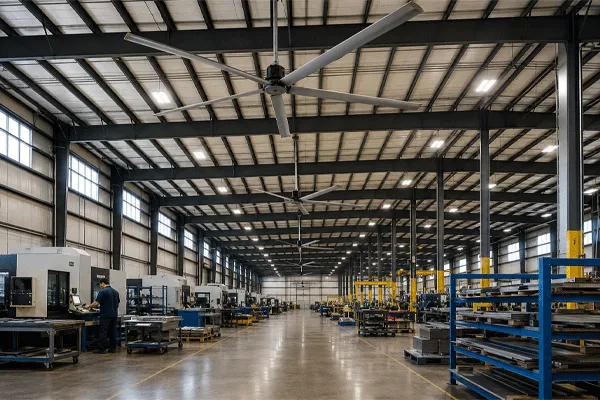
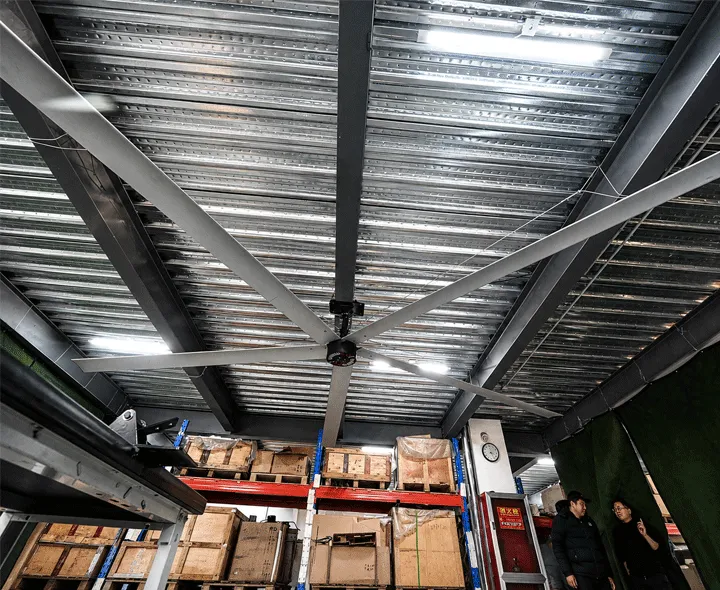
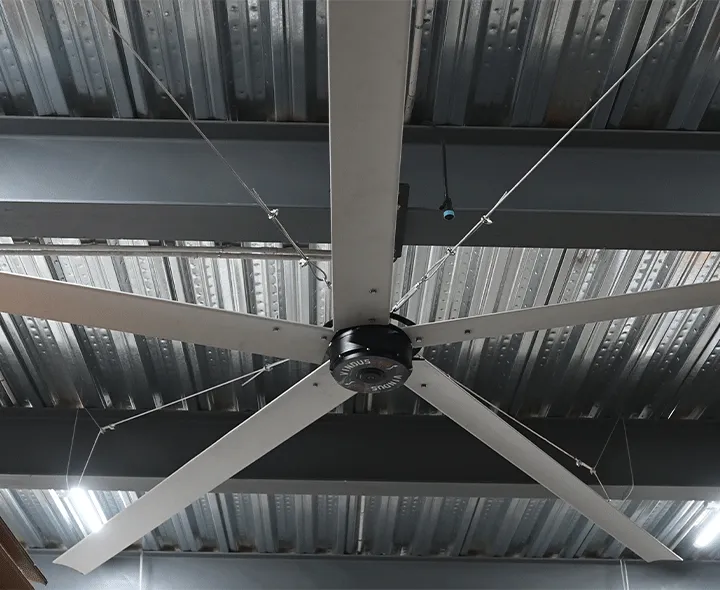
Hot, still air makes people slow and uncomfortable. In winter, warm air collects at the roof. Energy bills rise, and work slows down. The solution is simple: use an?Ventilador HVLS to optimize fluxo de ar and balance your building.
To optimize airflow with an?Ventilador HVLS, choose the right di?metro, place fans for full coverage, and run them at baixa velocidade to destratify ar quente in winter and create a cooling effect in summer. Good l?mina design and proper coloca??o de ventiladores entregar fluxo de ar consistente that cuts consumo de energia and improves comfort por todo o espa?o.
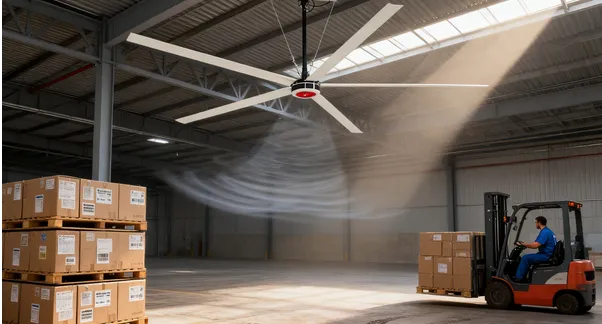
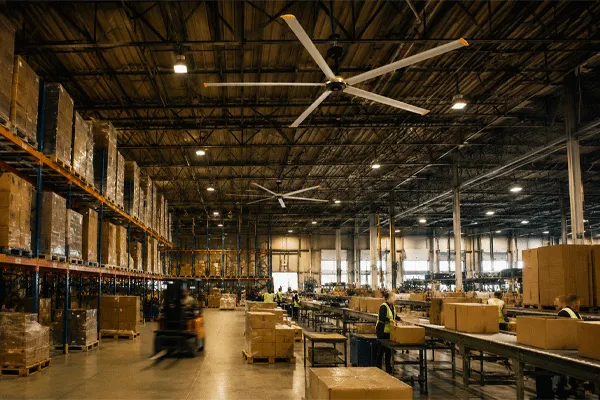
HVLS fan airflow optimization in a warehouse
As an Fabrica??o de ventiladores HVLS plant, we help industrial e comercial facilities—armazéns, factories, schools, centros esportivos, gyms, and commercial buildings—optimize airflow for comfort, safety, and eficiência energética. In this guide, I’ll show you exactly how f?s de hvls work, how to size and place them, and how to integrate climatiza??o strategy for real economia de energia and better produtividade.
Outline
- What is an HVLS fan and how do HVLS fans create consistent airflow?
- How does blade design shape the airflow pattern and air movement?
- What fan diameter and feet in diameter cover large spaces best?
- Fan placement: where should fans be mounted in a warehouse or gym?
- How HVLS fans help with heating, destratification, and temperature control
- Cooling with air at low speed: comfort, humidity, and ventilation
- How many fans? Balancing number of fans, coverage, and energy consumption
- System design: integrating HVLS technology with your HVAC system
- Safety, codes, and sprinklers: what FM Global and ASHRAE say
- Real-world results: airflow and energy wins in commercial and industrial spaces
1. What is an HVLS fan and how do f?s de hvls create consistent airflow?
Um Ventilador HVLS é um alto volume baixa velocidade ceiling fan, often 24 pés de di?metro, that can mover grandes volumes de ar quietly. These ventiladores de teto industriais s?o fans designed to move air gently across grandes espa?os, unlike ventiladores tradicionais de alta velocidade that blast a narrow jet. Os ventiladores HVLS fornecem a broad column of fluxo de ar that helps people feel legal in summer and balances ar quente in winter.
How hvls fans work:
Os ventiladores HVLS s?o normalmente installed high overhead. As the pás do ventilador turn at baixa velocidade, o os f?s se movem a large, slow air mass downward. The airflow created spreads outward along the floor and then rises along walls, forming a gentle loop. This “airflow pattern” promotes uniform airflow e melhorando o fluxo de ar everywhere—great for a armazém, gym, or factory.
“Os f?s de HVLS criam a cooling sensation by increasing movimento do ar over skin and by mixing layers of air to reduce hot and cold spots.”
Explore our?M650 Series HVLS fans for agile coverage e M750 Series for high-volume applications.
2. How does desenho da l?mina shape the airflow pattern e movimento do ar?
L?mina shape, pitch, and tip treatment set the fan airflow and throw. Modern desenho da l?mina produces a smooth column that resists breakup near the floor. A precise pitch (and sometimes winglets) reduces turbulence and block airflow zones under the hub. This is why a well-designed ventilador hvls can deliver optimal airflow at low rpm.
For example, one set of hvls fan blades with a slight taper can carry fluxo de ar através the floor farther than f?s tradicionais at much higher rpm. The l?mina do ventilador edge matters too: rounded or winglet edges can help keep fluxo de ar do ventilador attached longer, which is key for systems to improve comfort in a grande indústria facilidade.
In practice, a better l?mina means a wider effective footprint, fewer dead zones, and steadier circula??o de ar across aisles.
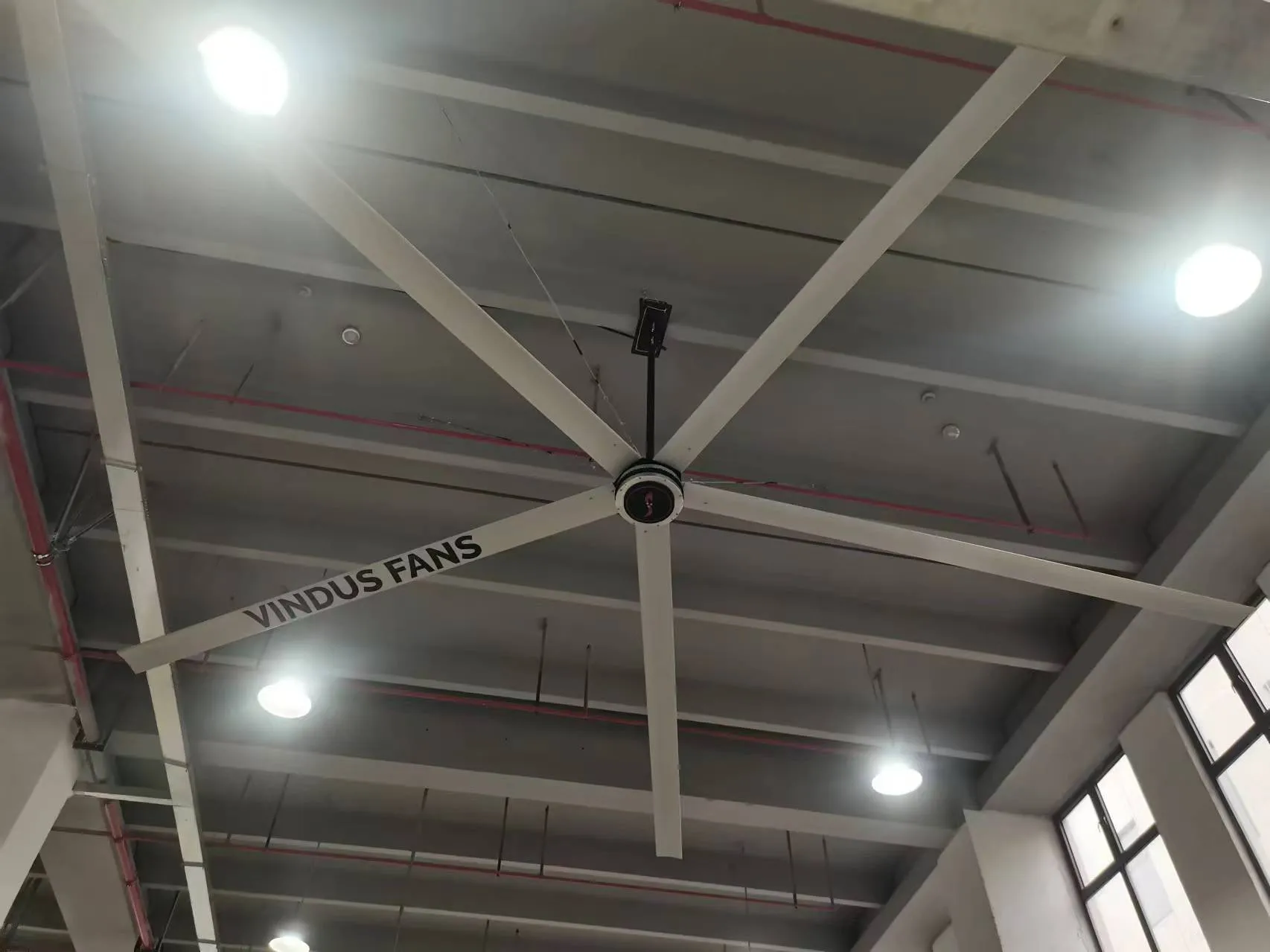
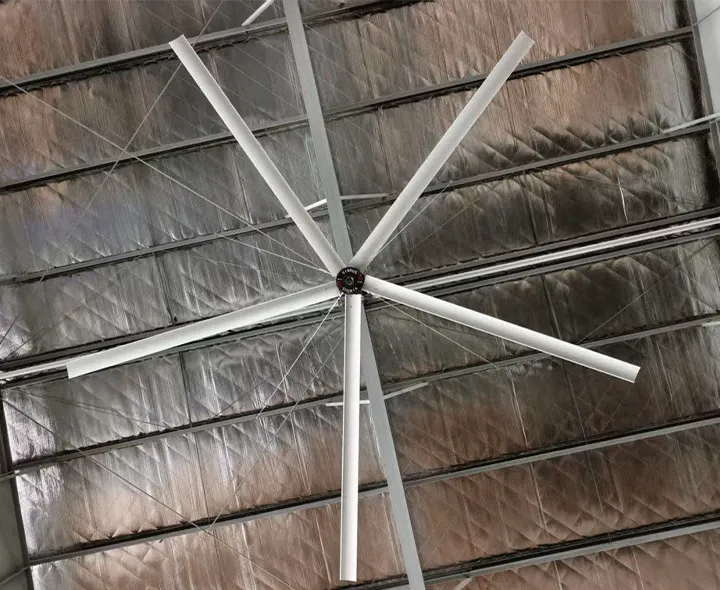
Bordas de l?minas com contorno aerodin?mico de ventiladores HVLS
3. What di?metro do ventilador e pés de di?metro cover grandes espa?os best?
Ventiladores de di?metro maior—often 14 to 24 pés de di?metro—cover more area with fewer units. A single industrial hvls fan may serve a wide portion of a armazém com alto volume airflow, while smaller fans need vários f?s to match coverage. As a rule of thumb, fans can significantly reduce the número de f?s needed when you go up in size.
Table: Example size → coverage (illustrative)
| Diameter of the fan |
Typical mounting height |
Approx. coverage |
Notas |
| 12 ft |
18–25 ft |
6,000–8,000 sq ft |
Good for smaller zones |
| 16 pés |
20–30 ft |
9,000–12,000 sq ft |
Popular in mid-size bays |
| 20 pés |
24–35 ft |
12,000–16,000 sq ft |
Fewer units per bay |
| 24 pés |
28–45 ft |
15,000–20,000+ sq ft |
Broadest, hvls fans cover wide footprints |
These ranges are typical planning numbers. Always validate for your building geometry and altura do teto.
4. Posicionamento do ventilador: where should fans be mounted in a armazém or gym?
Good coloca??o de ventiladores is simple: keep equal spacing, clear overhead beams, and avoid obstructions that block airflow. Se fans are placed over aisles, position them to push fluxo de ar através workstations, not shelving. Keep a safe distance from lighting, sprinklers, scoreboards, and trusses. Os ventiladores est?o montados to structural steel or certified mounts—never to weak members.
Best practices:
- Put the ventilador hvls near the center of each bay; adjust for columns or cranes.
- In very grandes espa?os, use vários f?s rather than overspinning one.
- Pensar sobre system design from the start: doors, ventila??o, e sistema hvac supply/return locations all interact with the ventilador hvls.
See our Warehouse HVLS Fans application guide e Manufacturing solutions page for layout examples.

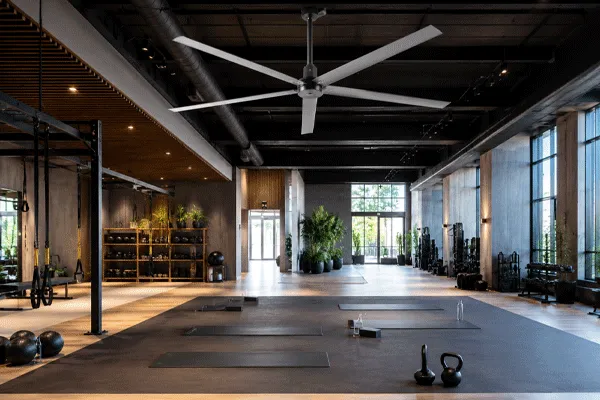
HVLS FAN IN GYM
5. How f?s hvls ajudam com heating, desestratifica??o, e controle de temperatura
In winter, hot ar quente pools at the roof. Destratifica??o com um ventilador hvls mixes that air back to the floor, improving controle de temperatura e cortando custos de energia. ASHRAE literature and case studies in large buildings show that destratification can reduce heating loads and increase eficiência energética, especially in high-bay spaces.
Um hvls technology paper on aircraft hangars reported meaningful energy and comfort gains from destratification—exact values vary by building, but the direction is clear: investing in hvls fans pays back in the cold season. Fans consume less energy no baixa velocidade while they mix gently.
Practical tip: Run the f?s de hvls slowly in winter to avoid drafts while you mix layers.
6. Cooling with ar em baixa speed: comfort, umidade, e ventila??o
In summer, HVLS fans are often the simplest way to feel legal without cranking ar condicionado. By raising air speed, they boost evaporative cooling at skin level. Research from the Center for the Built Environment shows fans allow comfort at higher setpoints (with lower consumo de energia). That’s fluxo de ar you can feel—quiet, even, and steady.
Porque hvls fans produce a gentle, alto volume breeze, people feel legal even when the thermostat is set a few degrees higher. In humid climates, moving air helps sweat evaporate and may limit moisture buildup pockets. Add adequate ventila??o and you’ll melhorar o ar distribution, reduce stale zones, and boost produtividade in busy gyms and factory lines.
7. How many fans? Balancing número de f?s, coverage, and consumo de energia
Sizing is a trade-off. A few ventiladores de maior di?metro can replace many small units. That saves installation labor, reduzir energia use, and maintenance time. But if you have cranes, mezzanines, or tight grids, several smaller f?s de hvls might fit better. The goal is the fluxo de ar desejado at working height with even coverage throughout the facility.
Rules of thumb (start here, then refine):
- Target fluxo de ar consistente of 2–4 ft/s at occupant level.
- Use a mix of sizes when bays change height.
- Consider controls to stage vários f?s with schedules.
For real-world examples, review ventiladores hvls para armazém e comercial deployments in our application pages: Commercial building applications e Sports centers.
8. System design: integrating Tecnologia HVLS with your Sistema HVAC
F?s HVLS e climatiza??o complement each other. During cooling, raise setpoints slightly and let the ventilador hvls provide comfort air speed. During heating, run fans slowly to destratify. In mixed-mode spaces, coordinate with sistema hvac supply/return to avoid fighting flows. Done right, f?s hvls ajudam cut mechanical run time and airflow and energy waste.
Controls that work: timers, BMS integration, occupancy triggers, and seasonal presets. With good projeto do sistema de ventiladores, fans can significantly apoiar systems to improve comfort at less cost than upsizing chillers or ducts.
9. Safety, codes, and sprinklers: what FM Global and ASHRAE say
Quando fans are mounted under sprinklers, follow FM Global clearances so a f? pode not delay spray patterns. Their published tests studied F?s HVLS and suppression; coordination is the key. Pair that with ASHRAE guidance on comfort (Standard 55) e ventila??o (62.1) for a complete approach.
Always follow manufacturer mounting rules and local fire code. Safety first; comfort and economia de energia second.
10. Real-world results: fluxo de ar e energia wins in espa?os comerciais e industriais
De armazéns to gyms, commercial hvls fans entregar airflow that helps regulate temperature and support produtividade. DOE labs and NREL guidance encourage HVLS in non-refrigerated espa?o industrial designs because fans designed to move broad air columns improve mixing at small power draw. That’s why investing in hvls fans is a common line item in upgrades.
Quote from the field:
“We swapped many small units for two f?s de hvls. Even at baixa velocidade, the floor felt legal and our custos de energia dropped—operators noticed the difference on day one.”
Quick buyer’s checklist
- Define zones: list bays, altura do teto, obstacles.
- Choose size: 12–24 pés options matched to areas.
- Coloca??o de planos: central, clear of obstructions, safe for sprinklers.
- Integrate controls: seasonal modes for cooling and heating.
- Verify performance: measure floor fluxo de ar at peak hours.
- Document ROI: track consumo de energia and comfort feedback.
Perguntas frequentes
How do I size an HVLS fan for a 30-ft bay?
Start by matching di?metro do ventilador to bay width and altura do teto; many spaces land between 16–20 ft. Verify fluxo de ar at the floor and avoid beams that block airflow. Use controls to fine-tune baixa velocidade opera??o.
Do HVLS fans work with rooftops units and ducted systems?
Yes. With a smart system design, f?s hvls ajudam seu sistema hvac move air efficiently. Raise setpoints a bit in summer and use gentle winter mixing for desestratifica??o sem rascunhos.
Are Hunter HVLS fans the only option?
No—many brands exist, including hunter hvls fans. Focus on engineering, support, and certified performance. We build heavy-duty f?s de hvls for tough duty and help you validate results on-site.
What about gyms and schools?
Gyms and schools benefit from fluxo de ar consistente and quiet operation. HVLS fans are often chosen to cover courts or cafeterias with less noise than a ventilador de alta velocidade.
Can HVLS fans reduce humidity problems?
They can help by increasing evaporation and mixing, which makes spaces feel legal and reduces stagnant pockets of moisture. Pair with proper ventila??o to manage umidade efetivamente.
Do hvls fans cover odd-shaped rooms?
Sim-fans are placed to match geometry. Sometimes vários f?s or mixed sizes are best to reach corners and create uniform airflow.
Sources and further reading
- ASHRAE Journal: Energy and comfort impacts of F?s HVLS in hangars.
- NREL Non-Refrigerated Warehouse Design Guide (2024): Recommends HVLS for high-bay warehouses.
- CBE, UC Berkeley: Why elevated air speed provides comfort and reduces cooling loads.
- FM Global: HVLS fans and sprinkler performance—clearance and design considerations.
- ASHRAE 55 (elevated air speed): Limits and guidance for comfort with fans.
Principais conclus?es
- F?s HVLS deliver gentle, alto volume fluxo de ar no baixa velocidade to cover grandes espa?os efficiently.
- A direita di?metro do ventilador, l?mina style, and coloca??o de ventiladores create the fluxo de ar desejado sem rascunhos.
- inverno heating savings come from desestratifica??o; summer comfort comes from legal air speed.
- Integrate hvls with your climatiza??o for strong airflow and energy performance and measurable economia de energia.
- Em um armazém, gym, or factory, f?s de hvls can boost produtividade and comfort with lower consumo de energia.
- Partner with an experienced HVLS fans manufacturer para optimize airflow and validate results in your facility.
HVLS fans’ broad coverage and steady comfort make them a smart upgrade for any facility manager. Whether you’re planning a new build or retrofitting, f?s de hvls are the simplest way to optimize airflow and cut waste—f?s trabalham for you all year.