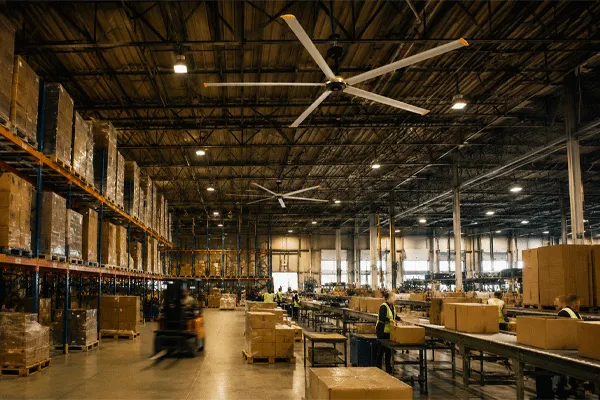
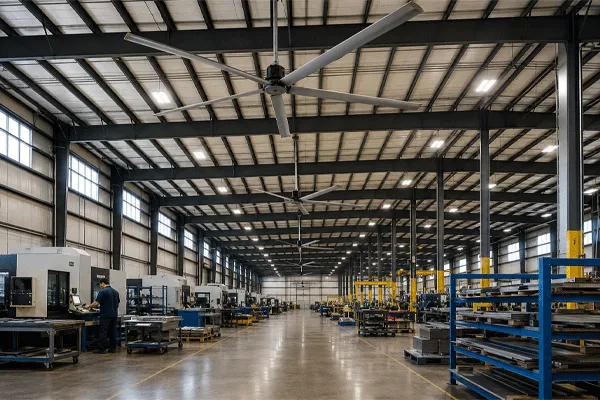
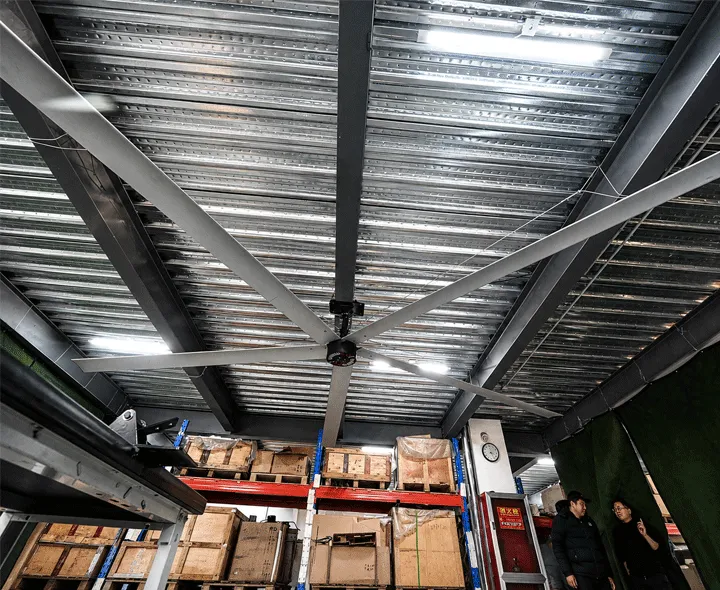
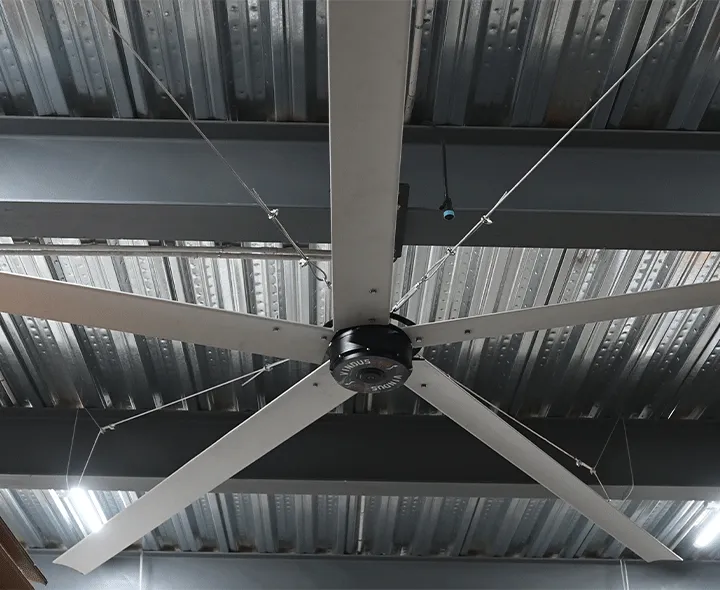
Sweat drips, paperwork flutters, and electric meters spin when?f?s tradicionais try—and fail—to tame a cavernous plant. Their short blades chop the air without reach. A purpose?built Ventilador HVLS, engineered for alto volume baixa velocidade performance, spreads smooth comfort while trimming bills.
The best?HVLS fan blade material balances light weight, rigidity, and corrosion resistance. Extruded aluminum offers strength and affordability; composite fiberglass resists chemicals; hybrid designs add carbon tips for durability. Paired with long airfoil profiles and shallow passo da l?mina, these blades move a large volume of air no baixa velocidade, delivering top?tier eficiência energética in warehouses, gyms, and schools.

hvls fan blade
?ndice
- What Makes an HVLS Fan Different From a Regular Fan?
- The Science Behind HVLS Fan Blade Design
- Blade Materials: Aluminum vs Composite vs Hybrid
- Strength, Safety & Engineering Standards
- Blade Size, Number of Blades & Shapes
- Performance Metrics That Matter
- HVLS Fans vs Traditional High?Speed Fans
- Integrating HVLS Fans With Ventilation & Air Conditioning
- Best Practices for Selecting the Right Fan for Large Commercial and Industrial Spaces
- Dicas de instala??o e manuten??o
- Case Study: 30?% Energy Reduction in a 100?000?ft? Warehouse
- Blade Material Quick?Reference Table
- Perguntas frequentes
- Key Takeaways (Full Guide)
1. What Makes an HVLS Fan Different From a Regular Fan?
HVLS significa alto volume baixa velocidade. Unlike a f? regular—the noisy, high?RPM device most of us know—an Ventilador HVLS relies on longer blades (up to 24?feet in diameter) that rotate slowly, creating a coherent column of air that descends, spreads sideways, and returns upward in a gentle cycle. This continuous movimento do ar fosters even temperature and humidity, improving circula??o de ar while consuming far menos energia.
Science behind HVLS: Wide airfoils produce lift just like airplane wings, letting the fan move large volumes of air efficiently with minimal drag.
Why Blade Material Matters
O material used em pás do ventilador plays a crucial role in safety, durability, and performance. Lightweight, rigid blades minimize bending at the hub and allow these fans to spin steadily without vibration. Corrosion?resistant alloys keep edges crisp so the movimentos de f?s air with each rotation decade after decade.
2. The Science Behind HVLS Fan Blade Design
A good fan blade design is more than an attractive curve—it’s precision engineering and design.
- Airfoil shape: A shallow camber lets blades cut through the air with minimal resistance.
- Blade pitch: Typically 8?13°, optimized to move air at low speeds without stalling.
- Number of blades: Four to eight; more blades increase drag, so designers balance weight and lift.
Behind HVLS fan blade design: Computational fluid dynamics tests illustrate how subtle tweaks in chord width or winglets can boost fluxo de ar by 12?%.
3. Blade Materials: Aluminum vs Composite vs Hybrid
| Property |
Extruded Aluminum |
Composite Fiberglass (FRP) |
Hybrid Aluminum + Carbon Tips |
| Peso |
★★★☆☆ |
★★★★☆ (light) |
★★★★☆ |
| Corros?o |
★★☆☆☆ |
★★★★☆ |
★★★★☆ |
| Stiffness |
★★★★☆ |
★★★☆☆ |
★★★★★ |
| Custo |
$ |
$$ |
$$$ |
| Typical Use |
Ventiladores industriais in factories |
Food/pharma espa?os comerciais |
Harsh chemicals or coastal climates |
Aluminum remains popular because it’s machinable and costs less; however, FRP blades resist acids in agricultural barns. Many f?s oferecem a hybrid approach: aluminum roots for strength, carbon?reinforced tips to prevent sag and keep the tamanho da l?mina consistent over time.
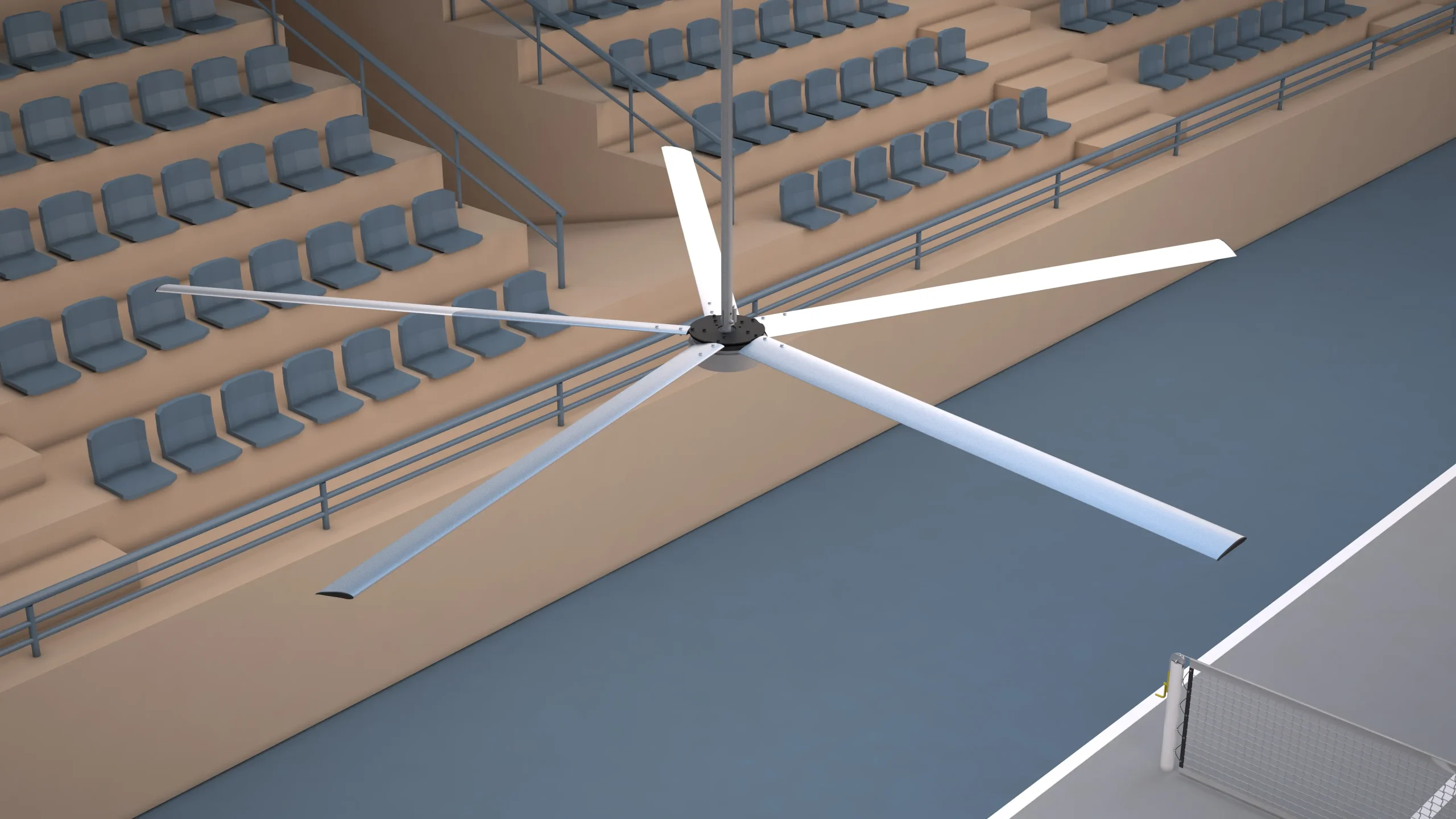
anodized aluminium blades
4. Strength, Safety & Engineering Standards
Modern systems follow UL?507 and ISO?5801 for airflow and structural testing. Hubs use forged steel, and fans are extremely over?engineered for a 10× safety factor. Retention cables ensure f?s trabalham safely if mounting hardware fails. Because os f?s s?o projetados to run near silently, vibration sensors shut units down before imbalance can escalate.
5. Blade Size, Number?of?Blades & Shapes — How to Move Large Volumes of Air Efficiently at Low Speed
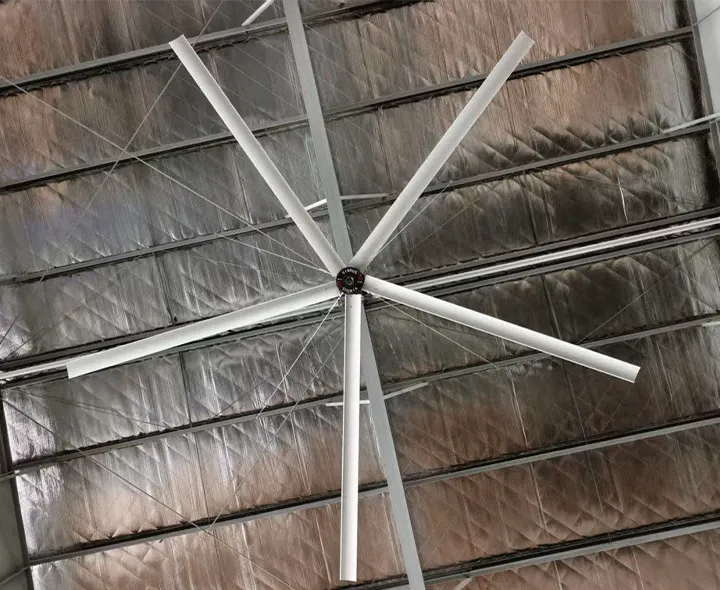
Selecionar o correto tamanho da l?mina is foundational. While the hub delivers torque, the longer blades — often 18?24 pés de di?metro — do the real work, scooping a grande volume de ar and throwing it downward without turbulence.
- Número de l?minas matters.* Four blades can create lift, yet five distributes load better and lets the design de ventilador remain slim. Normalmente, os ventiladores use six wide airfoils so the fan blades plays a crucial role in balancing lift and drag. More than eight blades may look impressive, but the extra surface simply adds friction — remember, we want to move air efficiently not fight it.
- Blade shapes and winglets.* Rounded tips reduce vortices, helping the blades move more air sideways instead of spilling off the ends. That is what makes HVLS fans so calm in operation.
Key engineering note: A 20?RPM sweep of six airfoils can mover grandes quantidades de ar — up to 240?000?CFM — while consuming just 1?kW. That same quantidade de ar would require twelve 56?inch ventiladores de teto running near 300?RPM.
6. Performance Metrics That Matter — CFM, Velocity Profile & Energy Efficiency
Measuring simply by fluxo de ar is incomplete. Real?world buyers should weigh:
| Métrica |
Porque é que é importante |
Typical HVLS Value |
| Volume de ar (CFM) |
Indicates how many cubic feet the movimentos de f?s each minute. |
200?000?240?000 |
| Velocity (fpm) |
Comfort depends on “felt” air; 200?300?fpm is sweet spot. |
220?260 |
| Eficiência energética (CFM/W) |
Divides CFM by watts to reveal how energia eficiente the unit is. |
200?300 |
| Consumo de energia (kWh) |
Direct impact on utility bill. |
≈1?kWh |
Porque um hvls fan is designed para air at a low speed it achieves superb eficiência energética. In destratification tests, one unit reduced gas burner runtime 25?%, proving fans will help HVAC systems rest.
Um facto curioso: Com air with each rotation flowing smoothly, occupants feel 4?°C cooler, letting thermostats rise and AC compressors rest — cost less all summer long.
7. HVLS Fans vs Traditional High?Speed Fans — Ceiling Fan vs Industrial Powerhouse
Regular Fan Limitations
UM f? regular, whether pedestal or residential ceiling model, relies on RPM. Fans are smaller, so to cover distance they must spin fast, creating noise and drafts.
Industrial HVLS Advantage
By contrast, ventiladores industriais desloca??o air at low speeds over grandes espa?os comerciais e industriais. The difference boils down to aerodynamics:
- Traditional high?speed fans chop and pressurize limited air.
- F?s HVLS vs box blowers: the latter recirculate dusty hot layers, the former blend entire air columns.
Ceiling fan vs 24?foot HVLS? The big rotor move large volumes of air efficiently, letting you replace vários f?s. One unit covers a basketball court; that’s why stadiums and espa?os industriais love them.

Ventiladores de alta velocidade VS Ventiladores de baixa velocidade
8. Integrating HVLS With Ventilation & Air Conditioning Systems
Properly placed units support natural ventila??o strategies, pulling fresh air through louvers, then redistributing cooled supply from ar condicionado registers. Because they cut through the air with minimal drag, they create air with minimal resistance paths that equalize temperature.
Winter Mode: Reverse the speed, and warm ceiling layers return to floor level, saving 20?30?% on heating fuel.
Summer Mode: Allow these fans to run continuously at 30?40?RPM; they’ll keep humidity uniform and deter condensation on food lines.
9. Best Practices for Selecting the Right Fan — Full Guide
Best practices start with defining aplica??es de f?s:
- Armazém storage? Pick anodized aluminum against dust.
- Chemical plant? HVLS fans may need FRP blades.
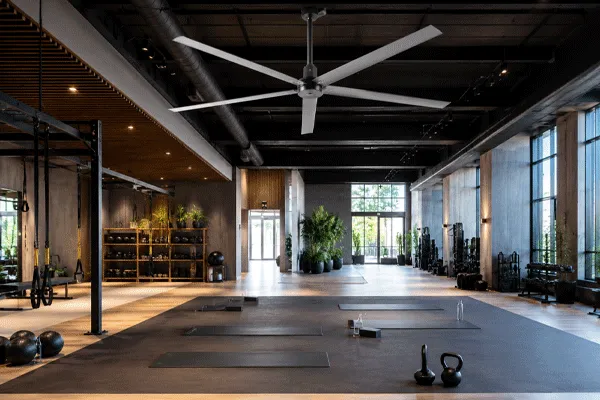
- Gymnasium? Low?noise PMSM motors keep workouts peaceful.
- Dairy barn? Stainless hubs resist ammonia.
Compare tipos de ventiladores — induction vs PMSM vs hydraulic. Next, run CFD to fans to maximize coverage without dead zones; ensure clearances >?3?ft below trusses so air can move large diagonally. Finally, verify desenho da l?mina pass fail?safe testing so fans are extremely reliable for decades.
10. Installation & Maintenance Tips — Keeping Fans Quiet and Safe
Mesmo o best fan blade design fails without solid mounting. Use seismic?rated I?beam clamps, torque grade?8 bolts, and double safety cables. Once running, units operar em baixas velocidades making only 39?dBA — fans are quite literally library?quiet.
Routine care:
- Quarterly dust wipe keeps balance true so air efficiently circulates.
- Semi?annual bolt torque check — 15?minutes each.
- Drive inspection yearly; hvls fans operate with sealed bearings, so grease points are minimal.
F?s oferecem instant visual feedback: if you see wobble, shut down and correct — easy because slow RPM lets techs observe safely.
11. Case Study: 30?% Energy Reduction in a 100?000?ft? Warehouse
Background: A logistics firm in Phoenix suffered 100?°F pick?lines. Twelve f?s tradicionais plus ar condicionado could not keep workers cool.
Solution: Three 24?foot HVLS units (extruded aluminum blades) installed between racking aisles.
Results:
- Consumo de energia dropped 29.6?% in summer, 22?% in winter (gas).
- Air circulation improved, eliminating hot stratified pockets.
- OSHA heat?stress incidents fell to zero.
The manager says, “These blades of HVLS fans feel like a city breeze. One ventilador fornece what ten blowers could not.”
12. Blade Material Quick?Reference Table
| Ambiente |
Recommended Material |
Raz?o |
Notas |
| Food & Pharma |
Composite FRP |
Non?porous, easy sanitation |
Meets FDA washdowns |
| Coastal |
Hybrid Al + Carbon |
Salt spray resistant |
316 SS fasteners |
| General Manufacturing |
6061?T6 Aluminum |
Strong, menos energia to spin |
Budget?friendly |
13. FAQs
How does blade pitch affect airflow?
A shallow 8?13° passo da l?mina maximizes lift so you can move a large volume with fewer amps.
Do HVLS units work in air?conditioned facilities?
Yes. They destratify cool air, letting thermostats rise 3?4?°C. That means grandes quantidades de ar reach occupants while compressors rest.
Can I retrofit to FRP blades later?
Absolutely — hubs accept modular wings; swapping material takes one hour.
Are six blades always better than eight?
N?o necessariamente. Número de l?minas depends on motor torque. More blades add drag; six is optimal for most diameters.
What warranty do industry?leading manufacturers give?
Ten years on motor, lifetime on blades — proof engineering and design pay off.
14. Key Takeaways — Quick Reference
- Ventilador HVLS technology blends alto volume e baixa velocidade to treat grandes espa?os with whisper?quiet comfort.
- A direita material used em pás do ventilador determines corrosion resistance and stiffness.
- One 24?foot unit replaces vários f?s e cost less to run long?term.
- Follow this full guide to specify, install, and maintain systems that deliver fluxo de ar benefits for 20?plus years.