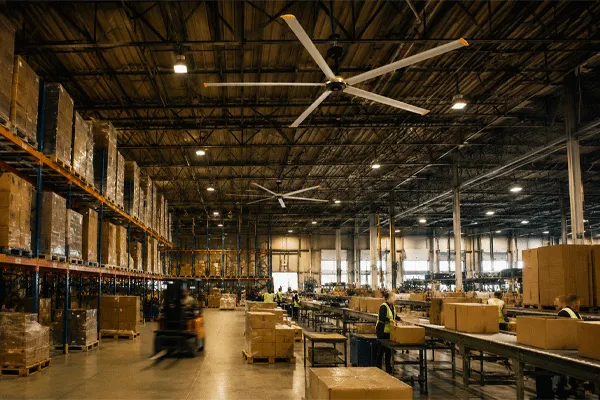
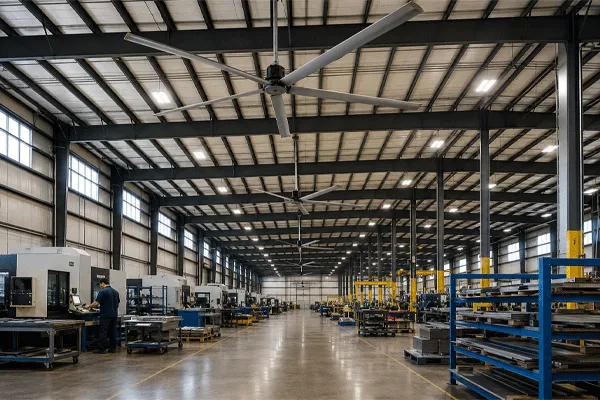
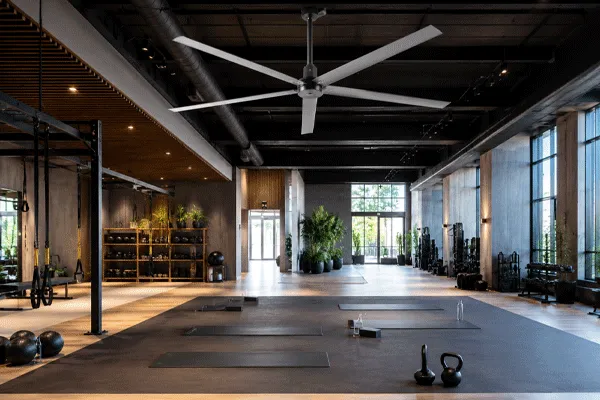
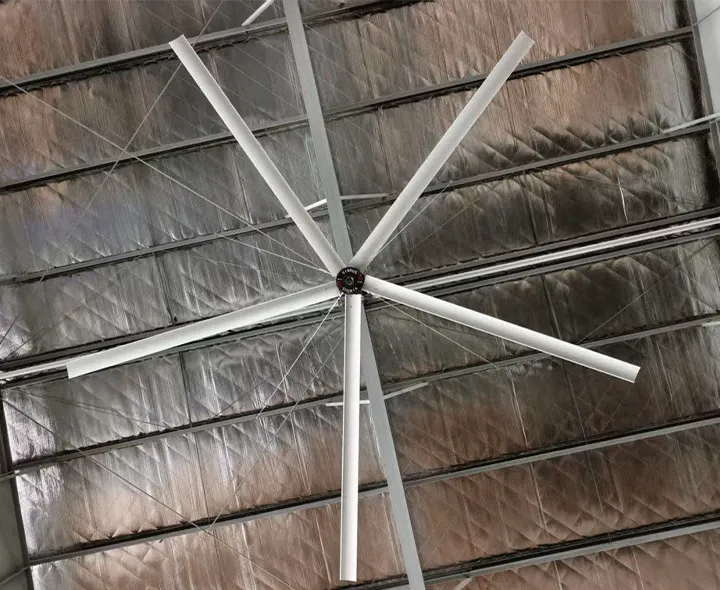
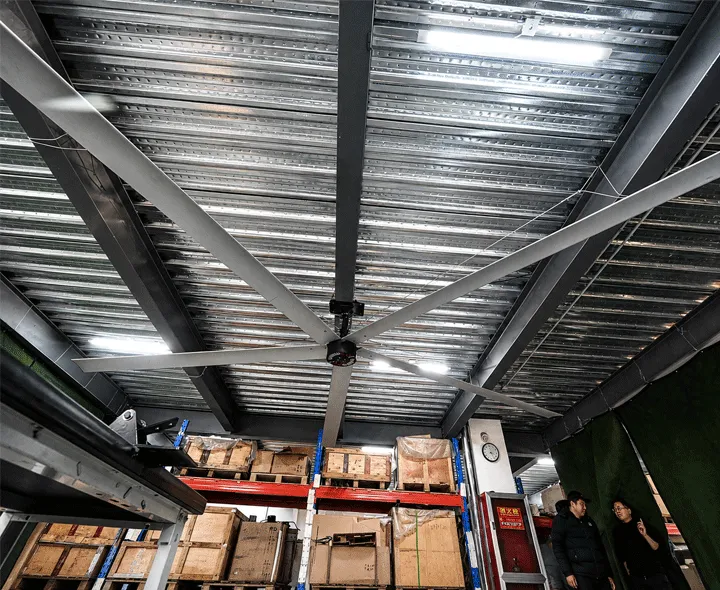
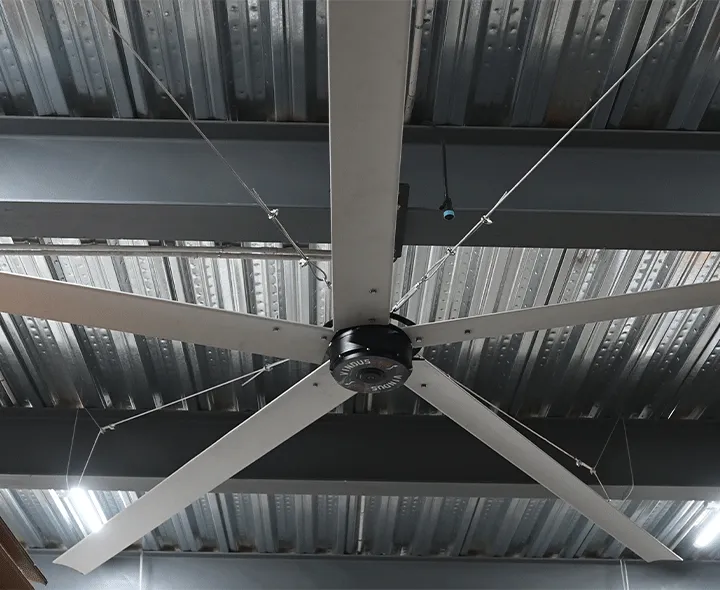
Many facilities struggle with poor air circulation, leading to discomfort and reduced productivity .
Stagnant, stuffy surroundings can raise energy costs and create an unproductive atmosphere.
A high-volume low-speed industrial HVLS fan can rapidly transform these issues into a comfortable environment.
How can high-volume low-speed industrial HVLS fans revolutionize airflow?
High-volume low-speed industrial HVLS fans work by moving large amounts of air at low speeds to promote continuous air circulation, enhance occupant comfort, and reduce cooling and heating costs. Their broad diameter and efficient motors deliver maximum air movement in large open spaces, making them a cost-effective solution.
1. What Is an HVLS Fan & Why Does It Matter?
Um?Ventilador HVLS?(high volume low speed fan) is a large-diameter?ventilador de teto?that slowly rotates to move a significant?quantidade de ar?across an extensive area . These?fans are large—often 6 feet or more—yet their?baixa rota??o?mechanisms spread?fluxo de ar?evenly without disruptive noise. By distributing a high volume of air at low speed, this?movimento do ar?approach fosters better?ventila??o?and helps create a more?ambiente confortável?in factories, commercial buildings, and similar?aplica??es industriais.
We specialize in manufacturing HVLS fans for?espa?os comerciais e industriais, including?grande indústria?areas and open environments. Because an?HVLS fan is designed?para?circular?um?alto volume de ar?no?baixas velocidades, it can tackle multiple issues: temperature stratification, condensation buildup, and less-than-ideal?qualidade do ar. If you want to solve such concerns, consider an?HVLS industriais?solution tailored to your unique needs.
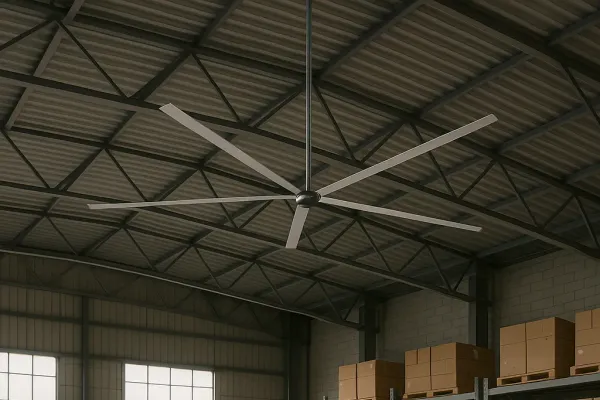
What Is an HVLS Fan
2. How Do HVLS Fans Work to Circulate Airflow?
Os ventiladores HVLS funcionam?by spinning at a?baixa velocidade?yet effectively pushing?grandes volumes de ar?downward . The airflow is gently directed over the area and then deflected horizontally. This continuous motion allows them to?circular?air in?grandes espa?os, such as warehouses, sports centers, and schools. This process eliminates stagnant air pockets, supporting improved?qualidade do ar?e conforto dos ocupantes.
Furthermore, the?air from an HVLS fan?descends slowly, creating a subtle?efeito de resfriamento?reminiscent of a reliable breeze. Because these?fans can move?air across huge distances, you reduce the reliance on multiple smaller,?f?s tradicionais, helping trim energy expenditure and preventing hotspots.
3. Why Choose High-Volume Low-Speed Fans Over Traditional Fans?
Maximized Air Movement
High-volume low-speed fans?leverage wide blades and?baixa velocidade?to generate gentle yet impactful?movimento do ar. This approach ensures a uniform?distribution?of air across broad stretches of your facility—unlike?f?s tradicionais, which cover limited areas and create unpredictable drafts.
Cost-Effective & Energy Savings
By opting for?high-volume low-speed fans, you can strategically decrease?ar condicionado?or heater usage, translating into significant long-term?economia de energia.?Os f?s também?ajuda?reduce humidity?buildup and maintain fresh?circula??o de ar, providing a more?comfortable and productive?ambiente.
“We replaced four standard fans with one HVLS fan and saw a 20% cut in cooling expenses,” says a facility manager in a local?armazém.
If you’re interested in advanced HVLS solutions for your workspace, consider exploring our?Ventiladores HVLS?página.
4. Are HVLS Ceiling Fans Energy-Efficient?
Yes. An?Ventilador de teto HVLS?delivers?eficiente em termos energéticos?performance by generating slow, consistent?fluxo de ar?instead of relying on high-speed rotations
. Using a?low speed hvls fan?fosters an even?movimento do ar?pattern that reduces reliance on large HVAC systems. This synergy leads to measurable?economia de energia, potentially trimming?custos de energia?by up to 30% or more in some scenarios.
Em?espa?os comerciais?prone to temperature fluctuations—like?armazéns e centros de distribui??o—HVLS fans enhance?ventila??o?and quickly stabilize ambient temperatures. By circulating?ar quente?down from the ceiling during cooler conditions and balancing heated areas, an HVLS setup remains both?custo-efetivo?and easy on the environment.
For insights on additional cost-saving measures that HVLS fans provide, consider our?Melhores ventiladores HVLS?resource.
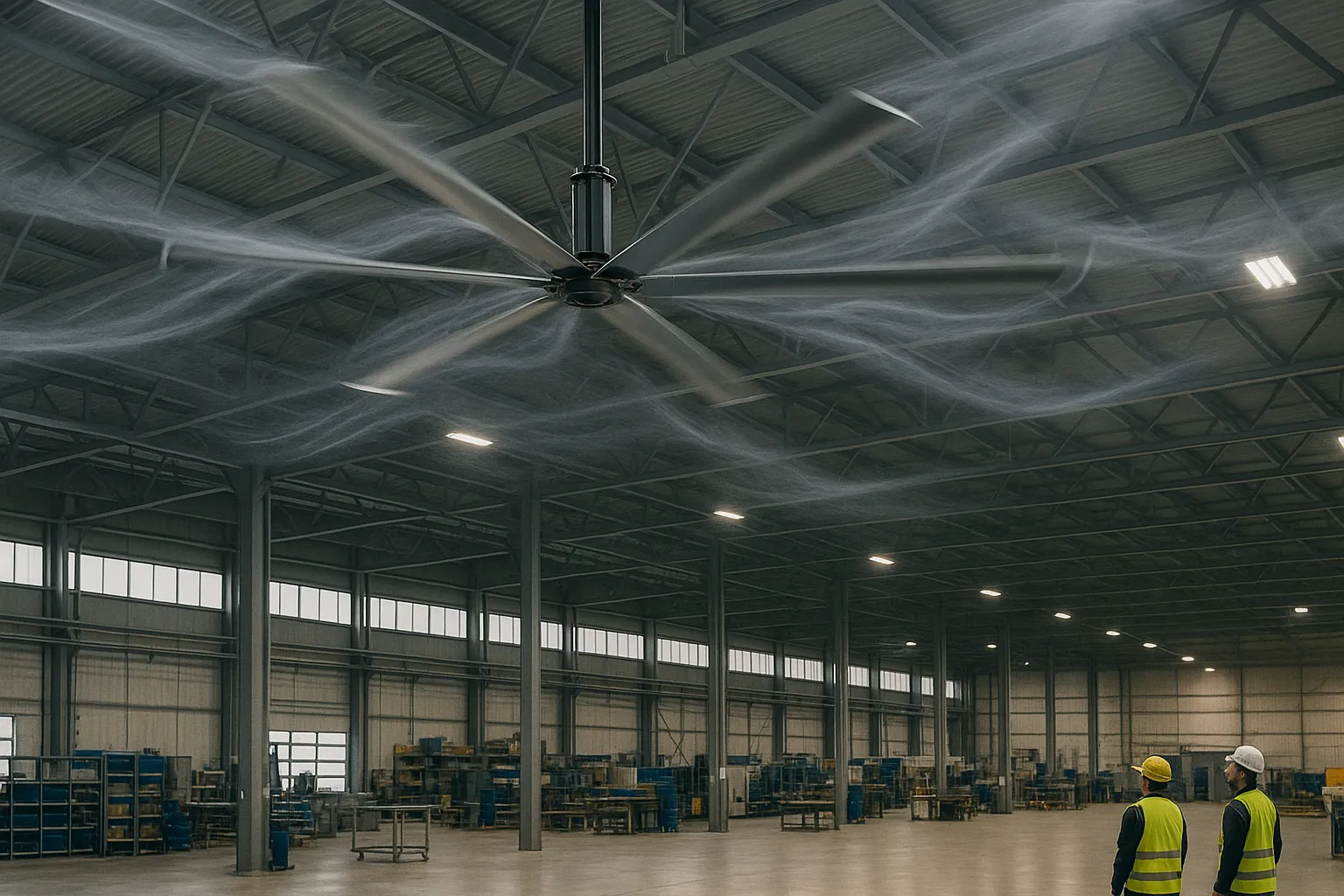
?Are HVLS Ceiling Fans Energy-Efficient
5. How Do Industrial HVLS Fans Improve Productivity?
Ventiladores industriais hvls?optimize?circula??o de ar?in factories, gymnasiums,?espa?os industriais, and more. As the efficient rotor blades?circular?considerable?volume de ar, employees enjoy a balanced and fresh indoor climate, directly boosting?produtividade.
- Comfortable Temperatures:
Workers in large?teto industrial?areas remain alert and motivated when the temperature remains stable.
- Cleaner Conditions:
Reduced stagnant air helps?melhorar a qualidade do ar, cutting down dust accumulation, odor issues, and potential safety hazards.
- Positive Mindset:
Enhanced occupant satisfaction due to better airflow fosters higher morale, which further bolsters?produtividade.
Looking to equip your workforce with an environment that supports efficiency and well-being? Browse through our?HVLS Fans for Warehouse?page to see how we can help.
6. What Makes Industrial Ceiling Fans Ideal for Commercial Spaces?
Ventiladores de teto industriais?offer reliable?air movement solutions?for a variety of?espa?os comerciais—spanning retail stores, classrooms,?grande comercial?lobbies, and?industrial e comercial?facilities. Below is a brief overview:
| Recurso |
Explanation |
| Broad Blade Span |
Covers?grandes espa?os abertos?para?mover grandes volumes de ar?in fewer units |
| Energy-Efficient Design |
Slower speed means lower energy draw and improved cooling or heating benefits |
| Low Maintenance |
Many HVLS models, like?ventiladores de teto industriais hvls, are built with robust parts |
| Opera??o silenciosa |
Minimizes background noise for occupant comfort |
| Adaptable Heights |
Works in high bays or even standard?residential ceiling?levels if designed well |
Estes?commercial hvls fans?excel in malls,?centros esportivos, e?espa?os como armazéns. By creating?increased air?coverage, an?ventilador de teto industrial?ensures customers and employees stay comfortable in any season.
For more details on heavy-duty ceiling fans, check out our?Ventilador de teto suspenso galvanizado?página.
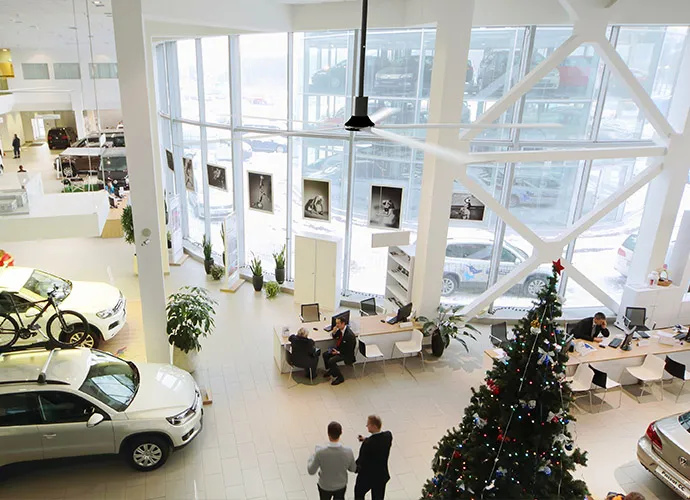
?Aplica??o de ventiladores em grandes edifícios comerciais
7. Can HVLS Fans Help With Heating And Cooling?
Yes. When winter comes,?hvls fans operate?in reverse or simply push rising?ar quente?back down, diminishing heat striation near the ceiling. This method can drastically curtail your heating load and help?create a more comfortable environment?for the entire facility.
During hotter months,?f?s hvls ajudam?by promoting an enhanced evaporative?efeito de resfriamento, which relieves employees and patrons from the sweltering air. This continuous breeze not only boosts occupant satisfaction but also decreases the reliance on costly air-conditioning systems. Consequently, facility managers can record noticeable savings on their monthly power bills.
Want to see how we can help your environment stay cool? Visit our?Ventiladores de teto HVLS?página.
8. How to Select the Right HVLS Ceiling Fan for Your Facility?
1. Assess Your Layout
Measure ceiling height, floor area, and structural challenges. Will your building support a?6 feet?or even larger fan diameter? This dimension is crucial for?maximum air movement?since bigger fans can span more coverage.
2. Match RPM and Motor Power
UM?alto volume?design with?baixa velocidade?rotation typically means you can opt for a smaller motor that pushes a balanced?fluxo de ar. Seek quiet, high-efficiency motors to maintain an inviting atmosphere for employees and visitors.
3. Evaluate Desired Outcomes
Are you primarily seeking cooling support, or do you aim to handle?ar quente?distribution in colder months? The answers help you decide the ideal model and speed ranges.
4. Partner with Trusted Brands
Look for recognized manufacturers with strong warranties, proven performance, and credible references. “We thoroughly tested HVLS fans from different brands, and the best solutions were from recognized leaders,” says a facility manager in a large distribution site.
For specialized help in deciding on an?ventilador de teto hvls, try our?HVLS Fans Manufacturer page.
9. Case Study: Transforming Warehouses And Distribution Centers
Background
A mid-sized manufacturing client was grappling with persistent hot spots and stuffy conditions in their?armazéns e centros de distribui??o. The lack of consistent?movimento do ar?forced them to overspend on energy-hungry AC systems.
Intervention
We introduced?hvls industrial fans—specifically, a?alto volume baixa velocidade?system designed to?mover grandes volumes de ar?em um?baixa rota??o?rate. These overhead fans could bring down the average temperature by 8–10°F, drastically reducing AC dependency.
Results
- Conforto do ocupante: Employees reported feeling?comfortable and productivethroughout their shifts.
- Energy Cost Reductions: The factory registered a 25% decrease in monthly bills, notably from less AC usage.
- Enhanced Air Quality: Better?ventila??ohelped?melhorar o ar?conditions, crucial for occupant health.
For more examples of how HVLS solutions can fit your environment, view our page on?Ventiladores de teto industriais para a indústria.
10. Perguntas frequentes
- How do these industrial fans differ from big ass fans?
“Big ass fans” is a colloquial phrase referring to very?grandes espa?os industriaisceiling fans. In essence,?f?s de bunda grande?are HVLS fans. Both terms describe overhead?fans are large?enough to?mover grandes volumes de ar?no?baixas velocidades, reducing energy consumption and improving occupant comfort.
- Are HVLS fans only for massive buildings?
Not necessarily. While HVLS fans are commonly used in?grandes espa?os industriais, they can also work well in gyms, schools, and smaller?comercial e industrial The key is properly sizing the fan to your building’s layout.
- Can HVLS fans reduce humidity?
By continuously circulating air, HVLS fans keep moisture from settling in corners or on surfaces. This effect can?reduce humidity, protect equipment, and protect sensitive materials from moisture damage.
- Do HVLS fans provide a cooling effect in hot climates?
HVLS fans excel at creating a gentle breeze that boosts heat evaporation on the skin, enhancing occupant comfort. By producing a?efeito de resfriamento, they lessen the reliance on AC systems.
- Are HVLS fans suitable for ceiling heights under 20 feet?
Modern designs like?HVLS Outdoor Ceiling Fansou?f?s comerciais?feature flexible blade lengths and motor power. As long as there’s ample clearance, the fan can deliver consistent?circula??o de ar?even in moderately scaled facilities.
- Which brand stands out for HVLS fans?
Some facilities rely on well-known names like?ca?ador industrial, but we also have our specialized lines of?ventilador hvls. We design each?ventilador industrialwith top-tier components and a focus on?eficiente em termos energéticos?innovation to ensure top-tier performance.
11. Summary Of Key Takeaways
- Os ventiladores HVLS fornecemcontrolled?movimento do ar?by shifting a?alto volume de ar?using?baixa velocidade, enabling balanced temperature control.
- Installing an?ventilador de teto industrialem?espa?os comerciais?and manufacturing plants can promote better?qualidade do ar?and occupant wellness.
- HVLS fans can improveprodutividade?by ensuring workers remain comfortable in both hot and cold climates.
- Achieve?economia de energiaand reduce overhead by supplementing or even replacing conventional HVAC systems with HVLS.
- Evaluate fan diameter, RPM, and brand reliability before making a purchasing decision.
- For more solutions, consider?HVLS Fans for Warehouse,?HVLS Fans for Commercial Building,?Big Industrial Fans for Manufacturing, e?Ventiladores HVLS Fabricante.