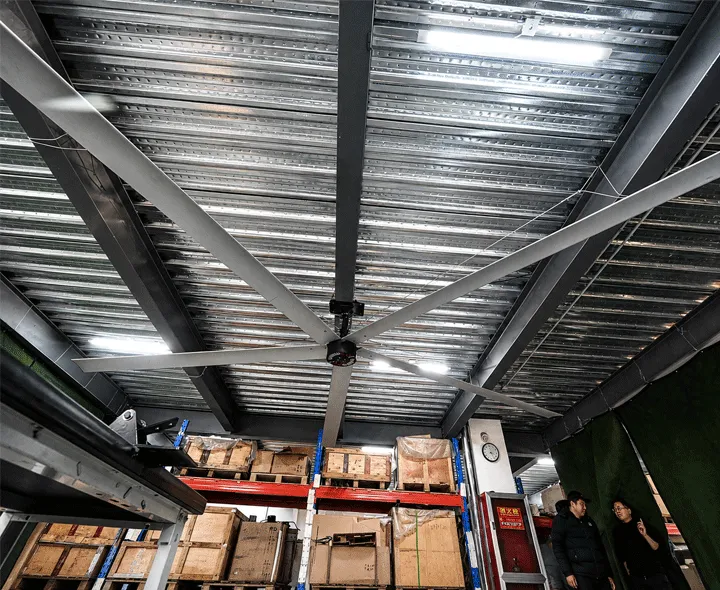
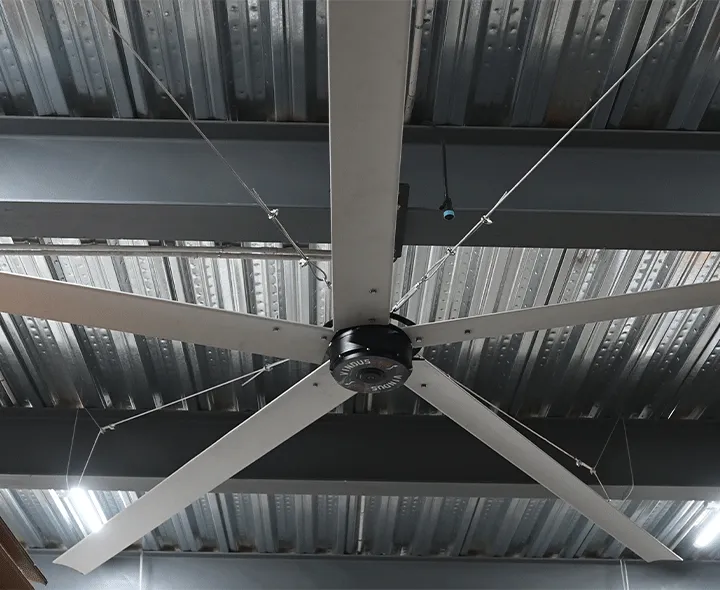
Many large facilities struggle with uneven temperatures, stagnant air, and rising energy costs. This discomfort can lower productivity and drive up utility bills, especially when traditional high-speed fans don’t reach every corner. The solution? A?HVLS fan?that delivers high volume air movement at low speed, ensuring comfort throughout.
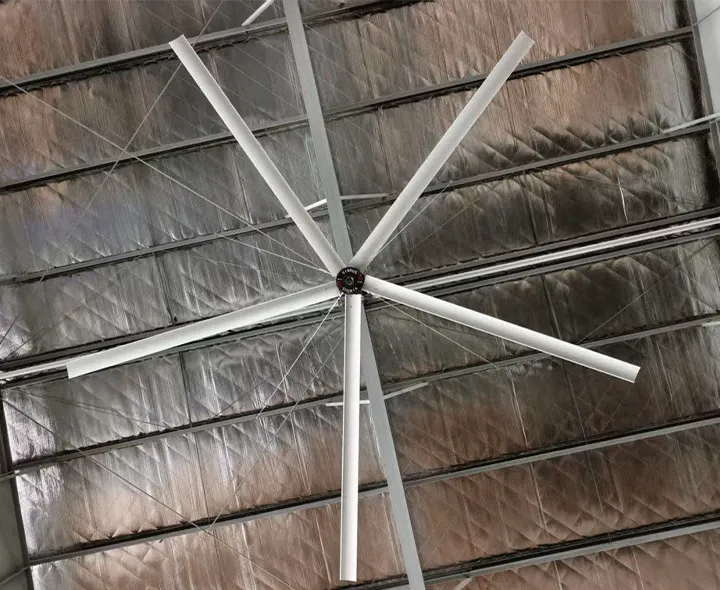
To maximize the?airflow?and?cooling effect, place a?HVLS fan?near the center of your ceiling, allowing at least?one fan diameter?from walls or obstructions. Make sure the?fan is mounted?at a suitable?ceiling height?to clear equipment and people below. Doing so promotes consistent air circulation across your?space, lowers energy costs, and maintains a comfortable environment.

HVLS Fan Placement Diagram
1. Why Consider an HVLS Fan for Your Space?
A?HVLS fan—short for?high volume low speed—is a specialized?industrial fan?engineered to?move air?gently but effectively in large areas. Unlike smaller, high-speed models,?HVLS fans provide?broad?air circulation?across wide-open?space, such as a?warehouse?or manufacturing floor.
The Advantages of HVLS Fans
- Energy efficiency: These fans operate at?low speed?yet deliver a significant?volume of air, helping you achieve notable?energy savings.
- Better air quality: Because?HVLS fans?are designed to move large volumes of air, they disperse stagnant air pockets and can help maintain healthier conditions.
- Enhanced comfort: The?cooling effect?from an?HVLS fan?can reduce perceived temperatures by several degrees, boosting morale and?productivity.
Case Study: One facility replaced?traditional high-speed fans?with?industrial hvls fans?and saw an immediate improvement in?airflow. Workers reported feeling cooler, and managers noticed increased?productivity?on the shop floor.
2. How Does Ceiling Height Impact Ceiling Fan Placement?
A?ceiling fan?works best when placed at the right elevation. For?HVLS fan?solutions, the?ceiling height?matters because it determines how far the?blade?is from people, machinery, and the floor. Achieving the correct?fan placement?fosters even?air movement?and reduces safety risks.
Key Factor to Consider
- Fan diameter: Larger fans may require greater clearance above and below. With?HVLS fans in buildings?that have tall ceilings, a?larger fan?can move a higher?amount of air?comfortably.
- Size and shape: In a broad?space, the?size of the hvls fan?matters. If the?ceiling?is especially high or angled, you might need an extension rod to properly position the?fan blade.
Tip: Before you?install ceiling fans?in a?large industrial?environment, measure from floor to rafter or beam to ensure the final?fan system?will be at least?one fan diameter?away from obstructions.
3. Warehouse Applications: Where to Place an HVLS Fan for Optimal Airflow?
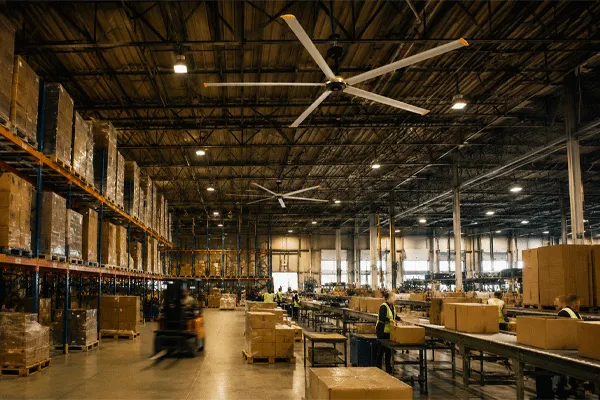
A?warehouse?often suffers from uneven temperatures, stuffy corners, and pockets of?warm air?near the ceiling. An?HVLS ceiling?solution can cure these issues by redistributing air more evenly.
Best Spots in a Warehouse
- Central Bays: Placing?HVLS fans?in the middle helps maximize coverage.
- Loading Docks: Fans can create a gentle breeze, balancing indoor and outdoor air.
- High Traffic Aisles: Since large areas tend to trap hot or humid air overhead, a?HVLS fan?can drive it down to occupant level for comfort.
Reminder: For truly effective?airflow from the fan, keep at least?least one fan diameter?from shelving, lighting fixtures, or sprinklers.

HVLS fans in warehouses
4. Installation Guide: Step-by-Step Fan Installation and Maintenance
Whether you manage a gym,?industrial and commercial?site, or a?warehouse, you need an?installation guide?to streamline the?fan installation?process.
-
Evaluate the Ceiling Support Structure
- Confirm that your?industrial ceiling?can safely hold the?fan motor, blades, and mounting hardware.
- Inspect for overhead beams, trusses, or other obstructions.
-
Size of the Fan
- Sizing hvls?is critical: measure your?space?carefully. The?size of the fan?and the?diameter of the fan?must match your environment.
- A?larger fan?might generate more?airflow, but ensure it fits around overhead obstacles.
-
Fan Model & Fan Controller
- Each?fan model?has unique specs. Some come with a?fan controller?that lets you adjust?air speed?for diverse conditions.
- For simpler upkeep, consider a?direct drive fan. This design tends to have fewer mechanical parts and less noise.
-
Mounting & Wiring
- Fans must?be installed according to local codes. If you’re in a?warehouse, be mindful of racks and forklift paths.
- Connect the?fan motor?to the building’s power supply. Some advanced units feature?hvls fan controls?that integrate with a building management system.
-
Testing & Maintenance
- After mounting, power up at?low speed?and check for noise or wobbling. Adjust if needed.
- Routine checks on?blade?alignment,?fan motor?function, and any dust accumulation keep your?fan system design?in top shape.
Note: If you need more detailed steps, see our?HVLS Fan Installation & Maintenance Guide?for specifics on hardware, electric connections, and?operation of the fan.
5. How Does NFPA 13 Affect Placing HVLS in Industrial Settings?
For some?industrial?or commercial sites,?nfpa 13?(National Fire Protection Association Standard) guidelines are a critical?factor to consider. According to these rules,?hvls fans shall be interlocked?with the?alarm system?in accordance with safety standards, ensuring they shut off during a fire emergency to allow unobstructed?water flow.
Alarm System in Accordance with NFPA 13
- Signal from the alarm system: If the sprinkler system activates, the?HVLS fan?must stop, helping water reach the fire.
- Fan Placement: Make sure the fan doesn’t block sprinklers. Some codes specify a distance from each sprinkler head to the?fan blade.
- Fans Don’t?Interfere**: If correctly positioned, HVLS fans help, rather than hinder, fire suppression by removing hot air layers and improving smoke layering recognition.
Legal Note: Always check local codes for compliance. Non-compliant?fan placement?might affect insurance coverage and occupant safety.
6. HVLS Fan vs. Traditional High-Speed Fans: Which Is Better?
You might wonder how an?HVLS fan?differs from?traditional high-speed fans. The short answer??Fans are designed to move?large amounts of air at a gentle pace, while high-speed fans deliver a narrower blast.
| Feature |
HVLS Fan |
Traditional High-Speed Fans |
| Air Movement |
Broad?air circulation?over a massive?space |
Concentrated airflow in a limited area |
| Energy Efficiency |
High due to low RPM and wide?fan blade?span |
Typically less efficient; smaller blades need more power |
| Noise & Vibration |
Generally quiet, especially with a?direct drive fan |
Often louder, which can be distracting |
| Typical Applications |
Industrial ceiling, large sports facilities, distribution centers |
Smaller warehouses, localized cooling spots |
| Installation Complexity |
May require structural checks and?installation of hvls?best practices |
Usually simpler, but less coverage |
Conclusion: For?large industrial?or commercial?space, the?advantages of hvls fans?often outweigh those of small, high-velocity models. You reduce clutter, get better coverage, and boost?energy efficiency.
7. How to Use HVLS Fans in Multiple Spaces Within the Same Facility?
One big question is whether?one fan?is enough to cover your entire building. Often, you may need?multiple fans?to achieve total coverage, especially in expansive areas with shelves or machinery.
When Fans Are Needed
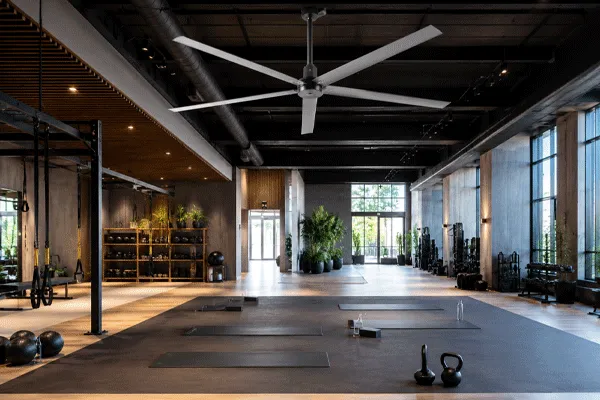
- Open Gymnasiums: High ceilings usually require at least?one fan diameter?from overhead structures.
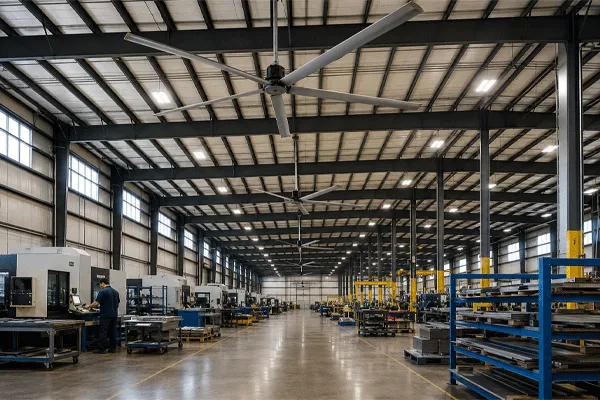
- Manufacturing Floors: Partition walls or large equipment can block airflow, creating a need for?several fans?to push air?throughout the space.
- Large Warehouses: If you have different zones with varying temperature demands, separate fans let you tailor the?fan speed?for each section.
Coordinating Multiple HVLS Fans
A centralized?fan controller?can sync them for consistent air distribution. Or you can run each individually to handle unique conditions. In either case, correct?fan placement?prevents overlapping wind patterns that reduce overall effectiveness.
Pro Tip: Check out?Sizing HVLS Fans for Optimal Cooling?to learn how to plan the best coverage ratio for your facility.
8. HVLS Ceiling Solutions: Are They Designed for Outdoor Use?
While many large?fan applications?occur inside factories,?hvls fans?can also appear in covered outdoor settings like terraces or open-air barns. However, if a fan is?designed for outdoor use, it must withstand moisture, dust, and variable wind conditions.
Identifying an Outdoor-Friendly HVLS Fan
- Fan to Ensure?Weather Resistance: Look for corrosion-resistant hardware and sealed?fan motor?compartments.
- Directional Fans?vs.?HVLS: Traditional?directional fans?might push strong gusts, but HVLS solutions revolve around wide?air movement?at?low speed.
- Installation and Maintenance: A fan in an outdoor environment often needs more frequent cleaning to dislodge debris from the?blade?or mounting bracket.
Warning: If your setting sees heavy rainfall or direct sunshine, confirm that your chosen?fan model?is rated for the conditions. Some designs can handle partial exposure, while others are strictly indoor.
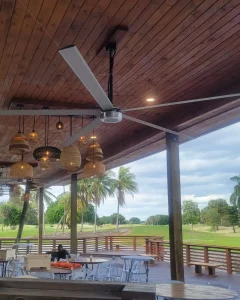
HVLS Fan in outdoor spaces
9. Do HVLS Fans Help with Overall Air Quality?
Yes,?hvls fans?help improve indoor?air quality?by eliminating stagnant air pockets and preventing?warm air?from collecting near the roof. This balanced?airflow?can limit mold growth, reduce humidity, and circulate fresh air.
How Fans Can Create a Healthier Environment
- Move Air Gently: By distributing more oxygen evenly,?fans help?reduce the spread of airborne pollutants.
- Destratify Temperature Layers: Eliminating hot spots or cold corners keeps employees comfortable.
- Enhance Ventilation: If your building already has an HVAC system, an HVLS addition can complement the existing setup for better results.
Case Study: One?Industrial and Commercial Facility?installed?hvls fans from hunter industrial?to tackle humidity issues and reported that moisture levels dropped by 10%, boosting occupant comfort and machine longevity.
10. Frequently Asked Questions
Below, we address?frequently asked questions?about?placing hvls?in different industrial or commercial?space:
Where should I put the HVLS fan in a small facility?
Place it near the center, ensuring it’s clear of beams or lights. Even?one fan?can effectively reach corners when unobstructed.
How do fans for optimal cooling compare to wall-mounted fans?
Wall-mounted fans?direct air in a single path, while?HVLS fans?are placed overhead and push high?volume of air?across a larger footprint. For broad coverage, HVLS typically wins.
Does the alarm system in accordance with NFPA 13 affect all buildings?
Check local codes. If sprinklers are present,?nfpa 13?often applies, meaning?hvls fans shall be interlocked?with the?alarm system?to stop during a fire event.
What if my facility uses a direct drive fan?
A?direct drive fan?simplifies upkeep. Fewer moving parts means less maintenance, quieter operation, and potentially extended lifespan. Just ensure it meets your building’s?size and shape?constraints.
Are HVLS fans well-suited for large industrial fans usage?
Yes.?Large industrial fans?of the HVLS type bring significant benefits in?energy efficiency,?cooling effect, and?air movement, particularly in expansive spaces like gyms or warehouses.
Closing Bullet Points: What to Remember
- HVLS fan?placement should be at the?HVLS ceiling?center for best?airflow?across the?space.
- Check?ceiling height, structural integrity, and local codes (including?nfpa 13) before?fan installation.
- Position the?fan blade?at least?one fan diameter?away from walls, lights, or sprinkler heads.
- Fans are needed?in multiple zones if obstacles disrupt?air movement?or if your facility layout is complex.
- Fans are designed to move?large volumes of air at?low speed, creating a comfortable?cooling effect?without spiking energy costs.
- Maintenance is easier with a?direct drive fan, especially in?industrial and commercial?environments.
- Placing hvls?fans carefully ensures safe operation, improved?air quality, and higher?productivity.
By following these guidelines and exploring the?installation of hvls?solutions for your facility, you’ll harness the?advantages of hvls fans: stable air coverage, consistent comfort, and tangible cost savings. We’re here to help you?install hvls?the right way—because every corner of your building deserves a refreshing breeze.