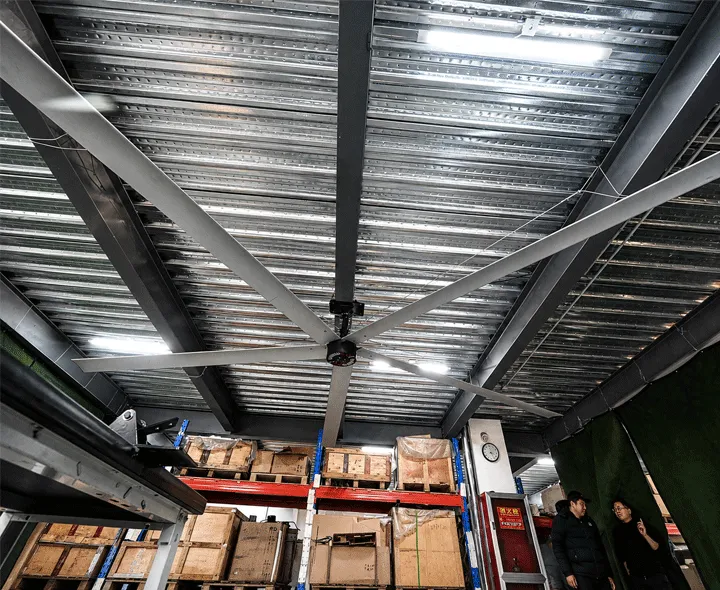
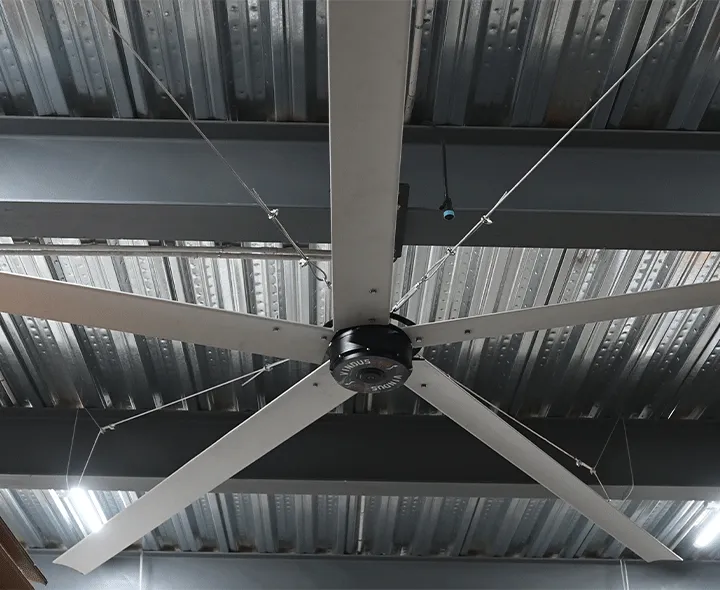
High-Volume Low-Speed (HVLS) fans are revolutionizing air circulation in large spaces like warehouses, industrial facilities, and commercial buildings. This comprehensive guide explores what HVLS fans are, how they work, and why they’re essential for improving comfort and energy efficiency in vast indoor environments.
Struggling with stuffy air and high energy bills in your large facility??Inefficient air movement can lead to uncomfortable working conditions and increased operational costs.?HVLS fans?offer an effective solution by enhancing airflow and promoting energy savings.
So, what does HVLS mean in fans??HVLS stands for?High-Volume Low-Speed. An HVLS fan is a large-diameter?industrial fan?that moves a?high volume?of air at a?low rotational speed. Unlike smaller fans that spin rapidly without effectively circulating air in big spaces,?HVLS fans?gently push large amounts of air over extensive areas, improving?airflow?and indoor comfort.

How Do HVLS Fans Work?
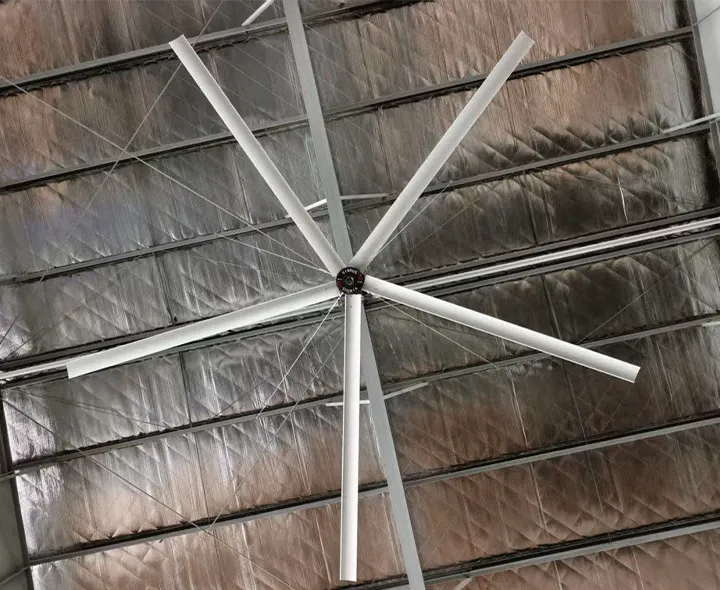
HVLS fans work?on a simple yet efficient principle: moving a significant?volume of air?at a slow speed. These fans have a?diameter?ranging from 7 feet to as much as 24 feet. The large?diameter?allows the fan to move more air than?smaller fans. When an?HVLS fan spins, it creates a column of air that flows down to the floor and outward in all directions, circulating air throughout the entire space.
This gentle but massive?air movement?helps to eliminate?stationary air, reducing temperature stratification and creating a more uniform environment. Because they operate at a?low speed,?HVLS fans?consume less energy compared to multiple?high-speed fans, leading to substantial?energy savings.
Benefits of HVLS Fans
Enhanced Airflow and Comfort
By moving large volumes of air,?HVLS fans?improve?airflow?dramatically. This increased?air movement?can make a space feel up to 7 degrees Fahrenheit cooler due to the?cooling effect?of air moving across the skin. In the winter,?HVLS fans?can be used to destratify warm air that rises to the ceiling, pushing it back down to occupant level.
Energy Savings
HVLS fans are designed?to be energy-efficient. The?low rotational?speed means they use less energy to move more air. Facilities that have installed?HVLS fans?often report significant?energy savings, as these fans reduce the reliance on heating and cooling systems. According to studies, the energy required to drive a fan increases with the cube of the rotational speed, so operating at a?low speed?saves energy.
Improved Productivity
A comfortable environment enhances worker satisfaction and efficiency. By maintaining optimal temperatures and improving?air quality,?HVLS fans?contribute to increased?productivity. Employees are less likely to experience?heat stress?and discomfort, leading to better performance.
The Difference Between HVLS Fans and Smaller Fans
The primary?difference between HVLS fans?and?smaller fans?lies in their size and operating speed. While?smaller fans?spin quickly to move air, they can’t circulate air effectively in large spaces.?HVLS fans, with their large?diameter?and?low-speed?operation, move air more efficiently across vast areas.
- Coverage: One?HVLS fan?can replace multiple?smaller fans, covering more area with fewer units.
- Efficiency:?HVLS fans move?air more effectively, leading to reduced?energy savings.
- Airflow: The gentle?air movement?reduces drafts and creates a more comfortable environment.
Applications of HVLS Fans
Warehouses and Distribution Centers
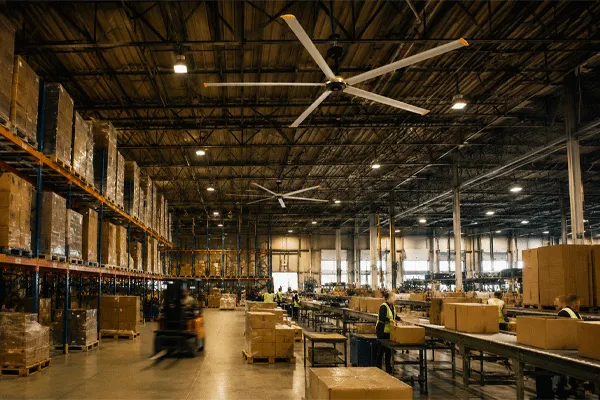
In spaces like?warehouses, maintaining consistent temperatures is challenging.?HVLS fans?help to evenly distribute conditioned air, reducing hot and cold spots. This not only improves comfort but also protects temperature-sensitive inventory.
Manufacturing Facilities
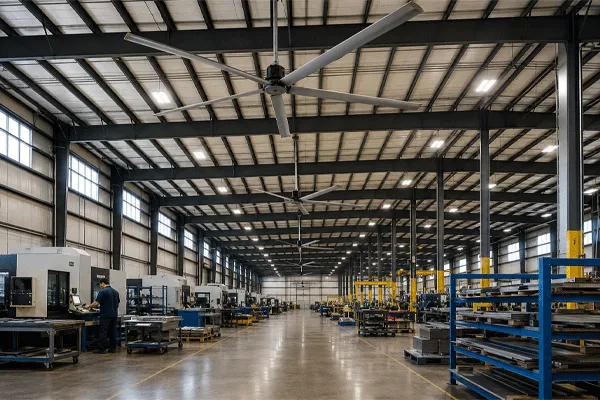
Industrial settings often generate heat due to machinery.?HVLS fans?circulate air efficiently, mitigating heat buildup and improving air quality. This leads to a safer, more comfortable workplace.
Commercial Buildings
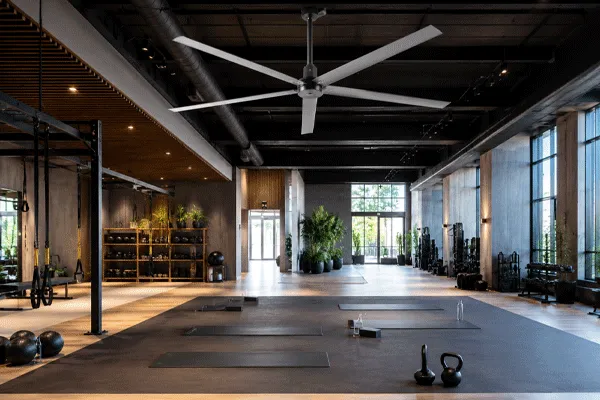
In?commercial spaces?such as malls, airports, and gyms,?HVLS ceiling fans?enhance?airflow?and contribute to a pleasant environment for customers and employees alike.
Schools and Sports Centers
Large communal areas like gymnasiums benefit from the?air movement?provided by?HVLS fans. They help maintain comfortable temperatures during events and reduce reliance on HVAC systems.

How HVLS Fans Support HVAC Systems
HVLS fans work?synergistically with existing?HVAC?systems:
- Destratification: They mix warm and cool air layers, improving temperature uniformity.
- Reduced Load: By enhancing?airflow, they reduce the strain on HVAC units, leading to?energy savings.
- Improved Air Quality: Increased?air movement?helps disperse pollutants and maintain healthier indoor air.
Selecting the Right HVLS Fan
When choosing an?HVLS fan, consider:
- Size of Space: Larger areas may require fans with a greater?diameter.
- Ceiling Height: Higher ceilings allow for better?air column?formation.
- Purpose: Determine if the fan is for cooling, heating support, or both.
- Energy Efficiency: Look for fans with high performance and low energy consumption.
Installation and Maintenance
Proper installation is crucial for optimal performance:
- Professional Installation: Ensures safety and maximizes efficiency.
- Regular Maintenance: Keeps the fan running smoothly and extends its lifespan.
HVLS fans are built?robustly, requiring minimal maintenance compared to multiple?smaller fans.
Understanding the Airflow of HVLS Fans
The?airflow?pattern of an?HVLS fan?is unique. The fan?produces a floor jet?of air that moves outward in a 360-degree pattern before rising back toward the ceiling. This circulation ensures that the entire space benefits from improved?air movement.
Frequently Asked Questions
What is an HVLS fan and how does it differ from a regular ceiling fan?
An?HVLS fan?is a?High-Volume Low-Speed fan?with a large?diameter?that moves a substantial?volume of air?at a slow speed. Unlike regular?ceiling fans?which are smaller and spin faster,?HVLS fans?are designed for large spaces and provide more efficient?air movement.
How do HVLS fans contribute to energy savings?
By enhancing?airflow,?HVLS fans?reduce the need for constant heating or cooling. They work with HVAC systems to distribute air more evenly, leading to significant?energy savings?due to reduced load on HVAC equipment.
Can HVLS fans be used in all seasons?
Yes,?HVLS fans are useful?year-round. In summer, they provide a?cooling effect?by increasing?air movement. In winter, they assist with destratification, moving warm air trapped near the ceiling down to occupant level.
Are HVLS fans noisy?
No,?HVLS fans?operate quietly due to their?low-speed?design. This makes them suitable for environments where noise levels need to be minimized, such as educational institutions and offices.
Do HVLS fans require special maintenance?
HVLS fans are built?to be durable and require minimal maintenance. Regular inspections and cleaning ensure optimal performance and longevity.
Conclusion
HVLS fans?are a game-changer for large industrial and commercial spaces. They:
- Improve airflow?and comfort
- Provide significant?energy savings
- Enhance?productivity?by creating a better working environment
- Complement existing?HVAC?systems
- Are more efficient than multiple?smaller fans
By investing in?HVLS fans, facilities can achieve a more?comfortable environment, reduce operational costs, and support a sustainable approach to climate control.
Key Takeaways
- HVLS fans?move a?high volume?of air at a?low speed?using large?diameter?blades.
- They are ideal for large spaces like?warehouses,?industrial facilities, and?commercial buildings.
- HVLS fans?contribute to?energy savings?by reducing reliance on HVAC systems.
- Improved?airflow?leads to enhanced comfort and increased?productivity.
- They are quiet, efficient, and require minimal maintenance.