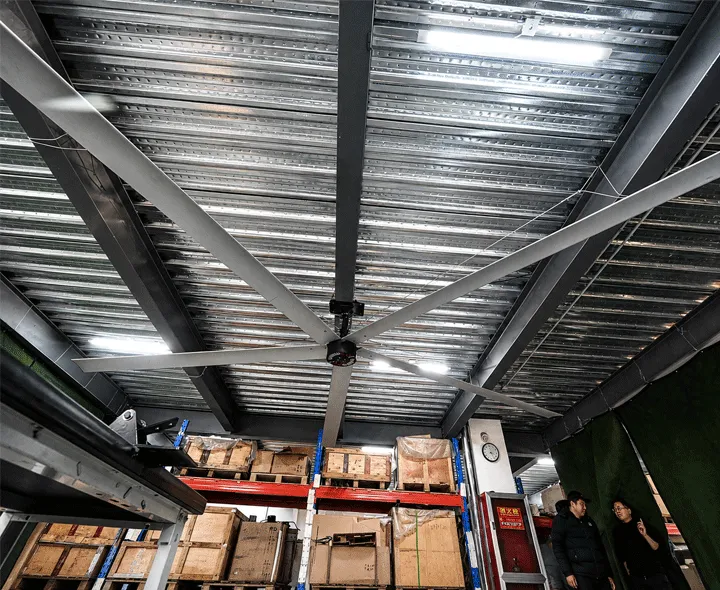
Feeling hot and uncomfortable in large spaces like warehouses, factories, and gyms? Poor air circulation can cause heat buildup, reduced productivity, and even safety risks.?High-volume low-speed (HVLS) fans?solve this problem by improving air movement, ensuring a cooler, more comfortable environment while saving energy.
What Is an HVLS Fan?
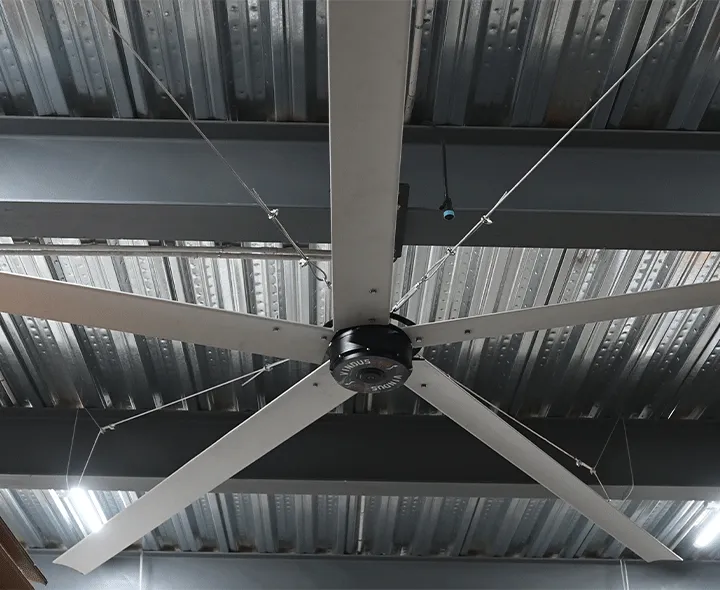
An?HVLS fan (high-volume low-speed fan)?is a?large industrial ceiling fan?that moves a high volume of air at low speed. Typically over?7 feet in diameter, these?industrial ceiling fans?operate at a?low rotational speed, effectively increasing air circulation and maintaining comfortable temperatures.

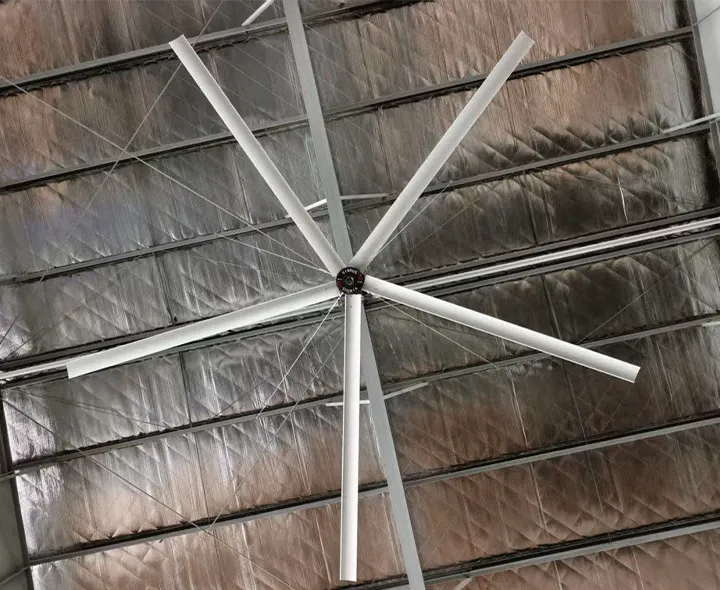
?HVLS Fan in Action
How Do HVLS Fans Work?
HVLS fans generate airflow through slow, wide blade rotation. Instead of relying on high-speed fans that use excessive energy,?HVLS fans move air at low speed, producing?a floor jet effect?that circulates air efficiently in?large spaces?like?warehouses, gyms, and manufacturing plants.
The?Difference Between HVLS Fans?and Traditional Ceiling Fans
| Feature |
HVLS Fans |
Traditional Ceiling Fans |
| Size |
7-24 feet in diameter |
3-6 feet in diameter |
| Speed |
Low-speed (50-120 RPM) |
High-speed (200+ RPM) |
| Airflow |
Covers 20,000+ sq. ft. |
Limited coverage |
| Energy Efficiency |
High (reduces HVAC costs) |
Less efficient |
| Usage |
Industrial & commercial |
Residential |
HVLS?fans are designed?to move air efficiently, reducing dependence on?HVAC systems, while traditional?residential ceiling fans?are optimized for smaller spaces.
Benefits of HVLS Fans
HVLS?fans provide?significant operational advantages, especially in?industrial spaces.
1.?Energy Savings and Cost Reduction
- HVLS?fans are more efficient?than high-speed fans.
- Can lower HVAC costs by?30% or more.
- Uses?less power than smaller fans?(as few as?0.75 kW per fan).
2.?Improved Air Circulation
- HVLS fans move?a?high volume of air?throughout large facilities.
- Helps distribute airflow evenly, reducing?hot spots?and?cold drafts.
3.?Enhanced Productivity and Safety
- Reduces?heat stress?in workplaces, making employees more comfortable.
- Decreases?humidity and condensation,?preventing equipment damage.
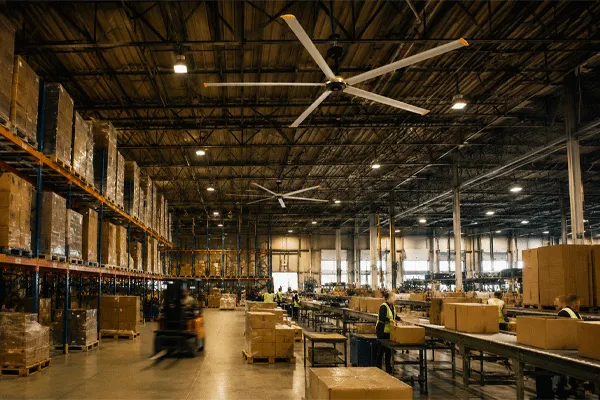
%Warehouse With HVLS Fans
Where Are HVLS Fans Used?
HVLS fans are?useful in many commercial and industrial applications, including:
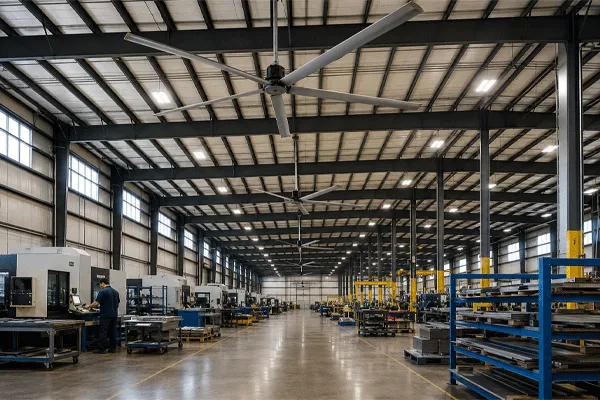
- ??Manufacturing Facilities?– Keeps workers and machinery cool.
- ??Warehouses & Distribution Centers?– Improves humidity control.
- ??Commercial Spaces?– Provides air circulation in malls and offices.
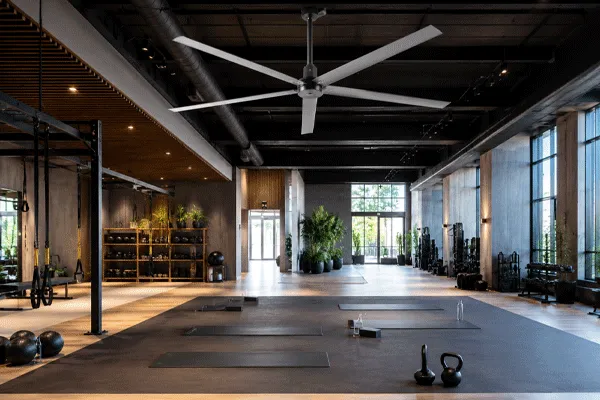
- ??Gyms & Schools?– Ensures comfortable environments in large indoor areas.
- ??Sports Centers?– Reduces indoor heat buildup and enhances?airflow.
- ??Loading Docks?– Improves?air at low rotational speed, reducing heat waves.
Logistics of HVLS Fans
Case Study: HVLS Fans in a Warehouse
A?distribution center?with?installed HVLS fans?cut cooling costs by?40%. With?better air movement, employees reported?higher productivity?and reduced?heat stress.
How to Choose the Right HVLS Fan?
When selecting an?HVLS ceiling fan, consider:
- Diameter Size?– HVLS fans range from?7 feet to 24 feet in diameter.
- Airflow Needs?– Determine airflow requirements based on?square footage.
- Mounting Space?– Ensure enough overhead clearance for installation.
- Energy Efficiency?– Opt for?low-speed commercial fans?that minimize energy use.
- Smart Control Systems?– Some?commercial HVLS fans?allow automated speed adjustments.
FAQs About HVLS Fans
How do HVLS fans cool people?
HVLS?fans cool people?by increasing?air movement, creating a gentle?cooling effect. They do not lower air temperature but?make spaces feel cooler?through improved airflow.
What is the difference between HVLS fans and home ceiling fans?
Home ceiling fans?are?smaller (3-6 feet in diameter)?and work in?residential spaces, while?HVLS fans?are?larger (7-24 feet)?and designed for?industrial applications.
Can HVLS fans be combined with HVAC systems?
Yes!?HVLS fans increase air circulation?and help HVAC systems operate more efficiently,?reducing heating and cooling costs.
What is the lifespan of an HVLS fan?
A high-quality?HVLS ceiling fan?lasts?10-20 years?with proper maintenance.
Summary: Why HVLS Fans Are Essential
??HVLS fans move a high volume of air efficiently
??Lower energy consumption = cost savings
??Reduce heat stress and improve air quality
??Enhance safety and productivity in large spaces
??Perfect for warehouses, commercial facilities, and gyms
Ready to Install HVLS Fans for Your Facility?
Contact us today for expert advice and?custom HVAC solutions?tailored to your needs! ?